Technology
Porsche Ranked #1 in Premium Car Brand Satisfaction — And the Numbers Behind the Title Are Just as Impressive
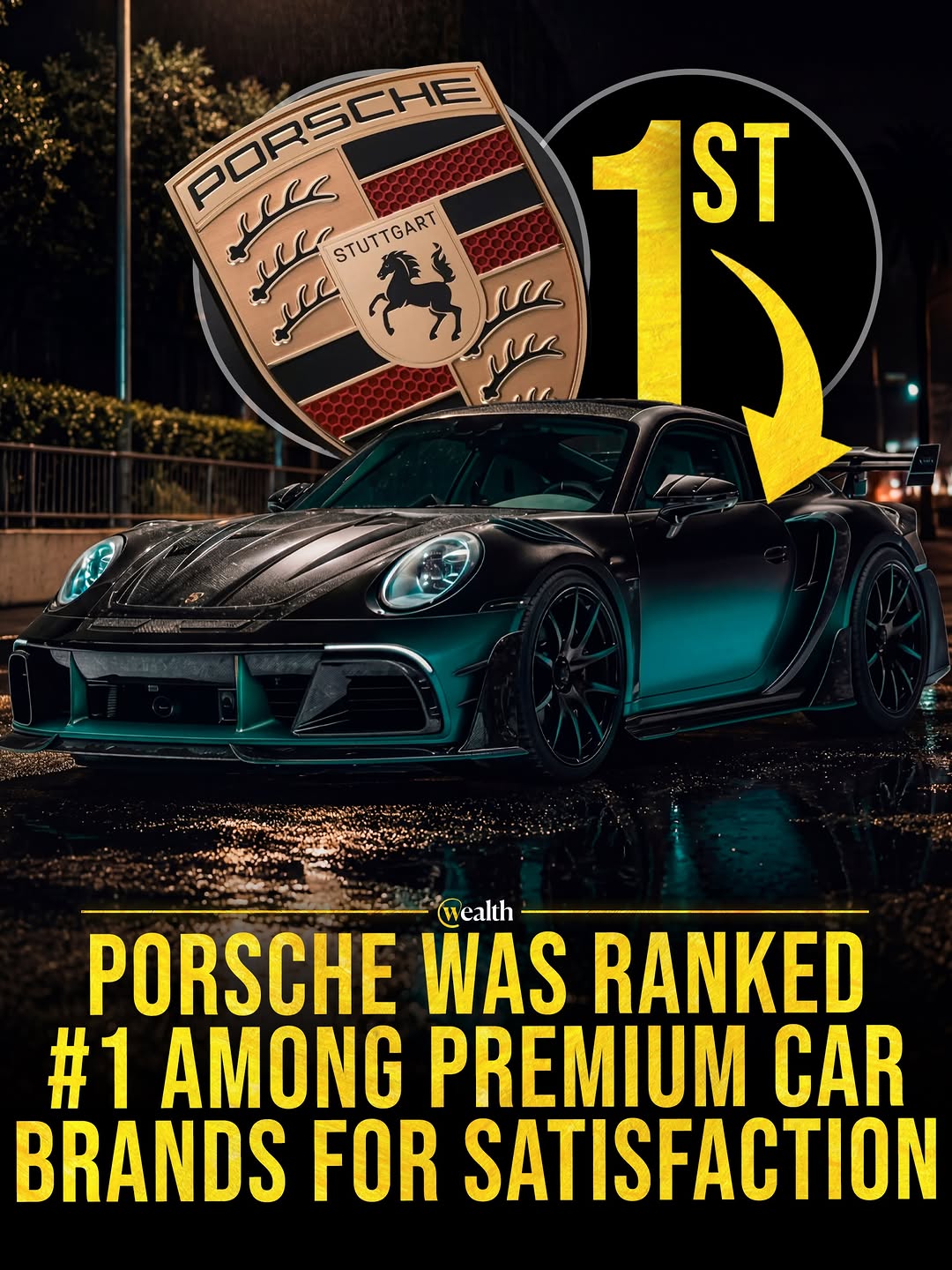
Porsche has claimed the top position among premium automobile brands in customer satisfaction, according to a widely followed industry ranking that measures owner experience, brand loyalty, and service quality. The Stuttgart-based automaker — home to some of the world's most recognizable sports cars and SUVs — outperformed direct rivals in the premium segment to earn the distinction. The recognition comes at a time when Porsche is also breaking sales records in the United States and holding ....
THE RANKING: WHAT IT MEASURES AND WHY IT MATTERS
Customer satisfaction rankings in the premium automotive segment are not simply popularity contests. They measure a combination of factors including the ownership experience, dealer service quality, vehicle reliability, perceived value for money, and long-term brand loyalty. In a market where consumers are spending well above the average vehicle price, these rankings carry significant commercial weight.
For automakers competing at the premium level — where brands like BMW, Mercedes-Benz, Audi, Lexus, and Land Rover all compete for the same buyer — topping a satisfaction survey signals something beyond engineering excellence. It means the ownership journey, from purchase through years of driving and servicing, consistently meets or exceeds expectations.
Porsche's #1 ranking confirms that its reputation for quality is not limited to what happens on the road. It extends to how customers feel about the brand before, during, and after the transaction.
Land Rover earned the #2 position in the same ranking, a notable result for the British SUV brand, which has invested heavily in build quality and customer experience improvements in recent years.
THE SALES RECORD: 76,219 U.S. DELIVERIES
Beyond the satisfaction ranking, Porsche has posted a landmark commercial achievement in the United States. The brand set an all-time domestic sales record, delivering 76,219 vehicles to American customers — a figure that underscores just how effectively Porsche has expanded its reach beyond its traditional sports car base.
This growth reflects a deliberate strategic shift. While the 911 remains the beating heart of Porsche's identity, the brand's revenue and volume growth has been powered by its SUV and crossover lineup. The Cayenne and Macan have introduced the Porsche ownership experience to a far broader audience than the two-door sports car segment ever could. The Taycan, Porsche's fully electric sedan and Sport Turismo variant, has also attracted a new generation of buyers entering the premium EV space.
The U.S. delivery record is particularly significant given the competitive pressure in the American luxury car market, where German brands face strong challenges from domestic and international rivals alike. Achieving a new sales high in this environment is a meaningful commercial milestone.
BRAND VALUE: $41 BILLION AND CLIMBING
Porsche's dominance is not confined to satisfaction scores and delivery numbers. The automaker also holds the title of the most valuable luxury car brand in the world, with a brand valuation of $41 billion. This figure places it ahead of competitors in the premium and luxury segments and reflects the strength of the Porsche name as a global asset.
Brand value at this scale is built over decades. Porsche's history stretches back to 1948, and the company has consistently maintained a reputation for producing performance-oriented vehicles with exceptional engineering standards. The 911, in continuous production since 1963, remains one of the most iconic automotive nameplates in history — and a key driver of the brand's premium perception worldwide.
A $41 billion valuation means that Porsche's name alone carries enormous commercial power. It influences pricing power, customer acquisition costs, dealer network strength, and the brand's ability to enter new segments — such as electric vehicles — with credibility that competitors must work hard to match.
ANALYSIS: WHAT PORSCHE'S TRIPLE ACHIEVEMENT SIGNALS FOR THE LUXURY AUTO MARKET
Winning the top satisfaction ranking, setting a U.S. sales record, and holding the highest brand valuation in luxury automotive simultaneously is not a coincidence. It reflects a coherent and well-executed business strategy.
Porsche has managed something that many premium brands struggle with: expanding volume without diluting prestige. Adding the Cayenne, Macan, and Taycan to the lineup significantly broadened the customer base, but the brand's commitment to performance, design, and quality has kept its premium reputation intact.
For the broader luxury car market, Porsche's results send a clear message. Customer satisfaction is increasingly a competitive differentiator. In a segment where products are technically sophisticated and prices are high, buyers expect an ownership experience that justifies the premium. Brands that fall short on service, reliability, or communication with their customers risk losing repeat buyers to competitors who deliver more consistently.
Land Rover's #2 position is also notable. After years of criticism over reliability concerns, the brand appears to be making measurable progress in how it is perceived by its customers — a trend that will be closely watched by industry analysts in the months ahead.
The results also arrive at a pivotal moment for the industry. Automakers are navigating the transition to electric vehicles, shifting consumer preferences, global supply chain pressures, and increasing competition from Chinese luxury EV brands entering Western markets. In this environment, brand trust and customer satisfaction are not just marketing metrics — they are strategic assets.
CONCLUSION
Porsche's trifecta — #1 in premium brand satisfaction, a record 76,219 U.S. deliveries, and a $41 billion brand valuation — paints the picture of an automaker operating at the peak of its commercial and reputational strength. The results reflect years of disciplined brand management, product diversification, and a consistent focus on the ownership experience. As the luxury automotive market faces one of its most complex periods of transformation, Porsche enters the next chapter from a position of considerable strength. Whether the brand can maintain this momentum through the EV transition and increasing global competition remains one of the automotive industry's most closely watched stories.
Sources: Industry satisfaction rankings, Porsche AG sales data, brand valuation reports — as reported via CM NEWS editorial research