Business
Why a US-Iran Deal Won't Fix Your Gas Bill Overnight — And What's Really Driving Prices at the Pump
Oil markets may be responding to ceasefire hopes, but American families are discovering a painful truth: prices rise fast and fall slow — and the gap in between comes straight out of their wallets.
Byline: CM News Economics & Energy Desk | Date: June 4, 2026
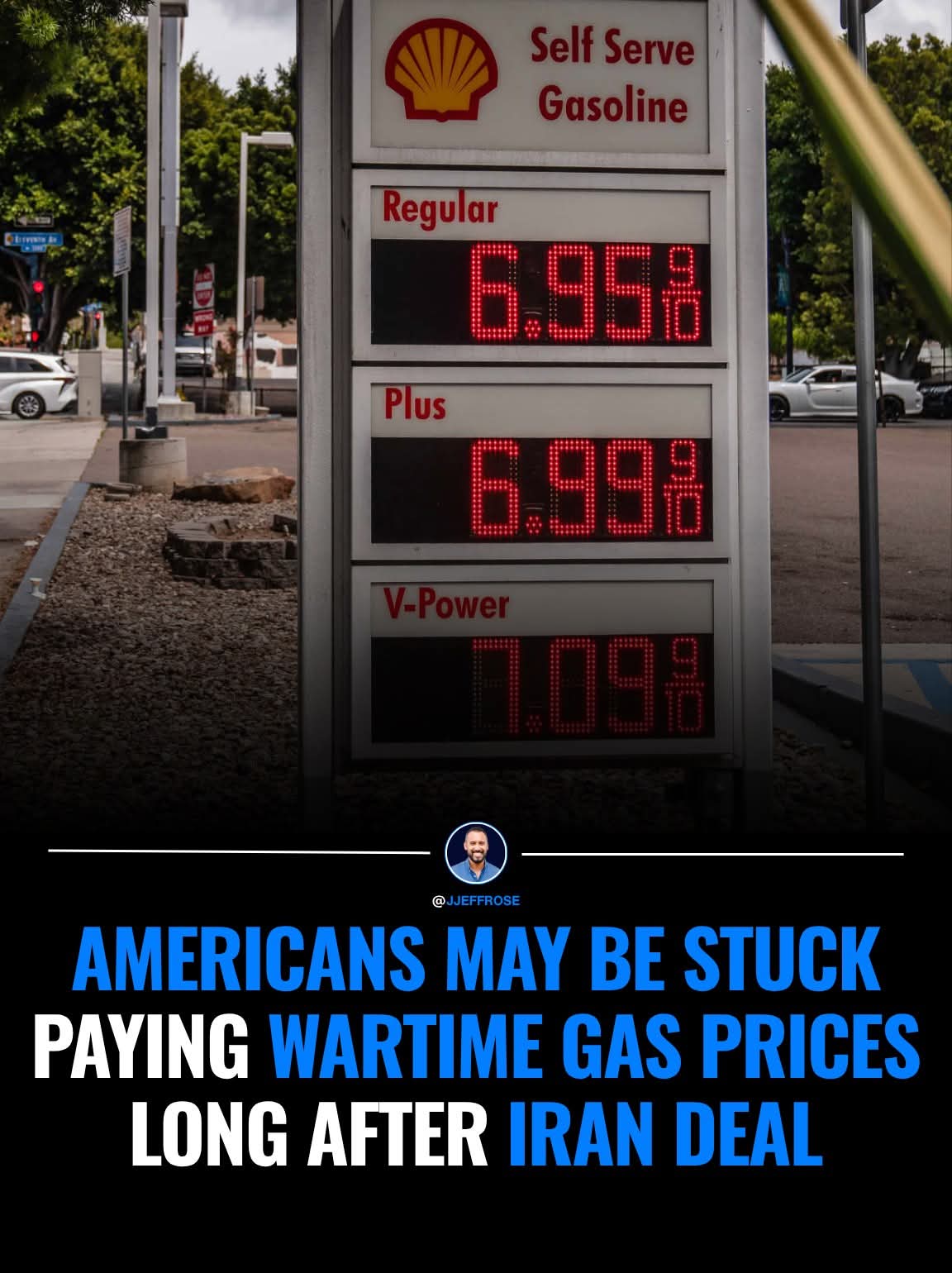
Gas prices in America have a well-documented pattern that frustrates drivers every single time: they spike like a rocket and drift down like a feather. As US-Iran ceasefire negotiations inch forward and crude oil begins to pull back from its 2026 highs, millions of Americans are watching their gas station signs cautiously — hoping for relief, but bracing for the familiar experience of waiting far too long for it to arrive. As of June 4, 2026, the national average for a gallon of regular gasoline stands at $4.24 — down 18 cents from the previous week, marking the second straight week of decline as crude oil prices remain below $100 per barrel. [AAA Fuel Prices] That is welcome news, but it barely scratches the surface of what ordinary families have absorbed since the crisis began.
Key Facts
- The national average for a gallon of regular gasoline is $4.24 as of June 4, 2026, down 18 cents from the prior week [AAA Fuel Prices]
- Gas prices surged 21.2% in March 2026 alone — the largest monthly increase since the Consumer Price Index was first published in 1967 [Empower]
- Gas prices have risen more than 50% since the US-Iran conflict began in February 2026 [101 Financial]
- Global oil prices have fallen roughly 20% from their 2026 peak amid ceasefire optimism, with Brent crude trading around $92.56 a barrel [CNBC]
- Economists at the Stanford Institute for Economic Policy Research project the Iran conflict will cost the average American household an additional $857 this year in gasoline alone [101 Financial]
- American drivers spend an average of $198.50 per month at the pump as of March 2026 [Empower]
- Gas prices are the top concern for American adults, with 86% saying they are concerned about prices going forward [Finder]
What Happened to Gas Prices — And Why
The surge in American fuel costs in 2026 did not come out of nowhere. Gas prices in the US rose sharply from less than $3 per gallon in the days before American and Israeli forces launched strikes on Iran, sending shockwaves through the global energy industry. [The Hill] The immediate trigger was the throttling of the Strait of Hormuz — the narrow waterway through which roughly one-fifth of the world's daily oil supply passes.
As of mid-May, the conflict was blocking the flow of around 14 million barrels of oil per day, according to the International Energy Agency, depleting global crude oil inventories at a record pace. [Axios] The US Navy launched a blockade of Iranian ports in response to Iran's restriction of Strait shipping, redirecting more than 100 vessels under the blockade. [The Hill] The combined effect was a supply shock that markets — and pump prices — responded to immediately.
Regular gas prices topped $4 per gallon at the end of March 2026 for the first time since August 2022, with crude oil prices having risen nearly 50% since the start of the conflict. [Empower] By late May, average US gas prices had hit $4.34 per gallon [CNN]— a level that translated directly into measurable financial pain for tens of millions of working American households.
The Iran Deal Factor: What Markets Are Pricing In — And What They're Not
Tentative ceasefire signals have provided some relief on oil trading floors. Global oil prices have tumbled by around 20% from their 2026 highs as investors have grown increasingly optimistic about prospects for a long-lasting ceasefire that would unlock shipping through the Strait of Hormuz. [CNBC]
But there is a meaningful difference between what oil futures traders price in and what shows up at your local Chevron or Shell station — and that gap is where American consumers have historically been left waiting.
Crude oil prices dropped about $5 per barrel on the first major trading day after rough outlines of a deal emerged, with Brent futures falling to around $98.76 — a 4.62% drop. [Axios] Yet energy analysts have been measured in their expectations for how quickly that feeds through to the pump.
Patrick De Haan, head of petroleum analysis at GasBuddy, stated that gas prices are currently falling, but until an agreement is signed and a significant number of ships transit through the Strait, the national average price of gasoline will likely remain well above $4 per gallon. [Axios]
Even if a deal is reached, energy markets are expected to remain disrupted for months. It is also unclear whether shippers will have confidence to quickly resume large-scale transport of crude oil, and some Asian markets with acute fuel needs take weeks to reach from the Gulf region. [Axios]
In other words: deals get signed, but supply chains need time — and the pump price is the last thing to move.
The True Cost: It's Not Just Your Gas Tank
The impact of elevated energy prices extends well beyond the forecourt. Energy costs are embedded throughout the entire consumer economy, and when oil prices spike, Americans feel it in ways they may not immediately connect to the pump.
Transportation costs ripple upward into food distribution, meaning grocery bills climb. Airline jet fuel costs rise, pushing up airfare. Heating and cooling costs increase as natural gas and electricity generation expenses follow the broader energy complex. The Strait of Hormuz closure also disrupted global LNG supplies, affecting utility bills and transportation costs far beyond what consumers see at the pump — and the damage to household budgets compounds with each passing month of elevated prices. [101 Financial]
The numbers tell a stark story. For middle-class families earning between $60,000 and $80,000 annually, the Iran-related fuel surge translates to roughly $100 to $200 more per month at the pump. [101 Financial] That figure — which represents a direct hit to disposable income — is money that previously went toward car payments, grocery bills, or savings. Analysts have also calculated that rising gas prices will effectively swallow many families' 2026 tax refunds. [101 Financial]
Analysis: The Asymmetry Problem — And Why It Keeps Happening
There is a well-established economic phenomenon that energy economists call "rockets and feathers" — the observation that retail fuel prices rise quickly in response to crude oil increases but fall far more slowly when crude prices come down. The reasons are structural rather than conspiratorial, though the effect on consumers is the same regardless.
Refineries operate on contract pricing cycles that don't instantly reflect spot market changes. Fuel inventories purchased at higher prices must be worked through before cheaper-input products reach the distribution network. Shipping and logistics costs carry their own lag. And gas station operators — many of them small business franchisees managing thin margins — adjust prices cautiously, particularly when the broader market direction remains uncertain.
The result, as millions of American drivers know from lived experience, is an asymmetry that never seems to work in their favour. The good news — when crude prices fall — takes months to fully arrive at the pump. The bad news arrives within days.
UBS analysts have noted that despite ceasefire optimism in financial markets, there is still little evidence of any short-term improvement in vessel traffic or energy flows through the Gulf region, with Iran crude loadings for May remaining below 0.3 million barrels per day — sharply down from April's average of 1.5 million barrels per day. [CNBC] Supply, in other words, has not yet normalised — and until it does, price relief at the retail level will remain partial and slow.
What Happens Next
The trajectory of US pump prices over the coming months will depend heavily on whether a durable ceasefire agreement is reached, whether the Strait of Hormuz reopens to normal commercial shipping, and how quickly global oil inventories — currently depleted at historic rates — can be replenished.
National Economic Council Director Kevin Hassett has stated that the federal government and private companies still have billions of oil barrels in strategic reserves, providing runway to offset some of the price pressure while negotiations continue. [CNN]
AAA noted this week that pump prices are cooling off as crude oil remains below $100 per barrel, though uncertainty lingers over when sustained relief will materialise for drivers embarking on summer travel. [AAA Fuel Prices]
For American families, the most realistic near-term expectation is gradual, uneven improvement — not the rapid price drop that geopolitical optimism might suggest is imminent. The oil market can turn on a headline. The gas station sign, as history repeatedly demonstrates, moves on its own schedule.
Conclusion
When politicians promise that a deal with Iran will bring energy prices down, they are not wrong — in direction. But the speed at which that relief reaches the average American's fuel budget is a separate matter entirely, shaped by the structural mechanics of refining, distribution, inventory, and market confidence. With 86% of American adults expressing concern about gas prices going forward [Finder] , the pressure on policymakers to close a deal — and on energy markets to transmit that relief quickly — has rarely been greater. In the meantime, working families are left absorbing the gap between what traders price in and what the pump actually charges. That gap, as always, costs real money.
Sources: AAA, GasBuddy, CNBC, Al Jazeera, Axios, The Hill, Stanford Institute for Economic Policy Research, UBS, International Energy Agency, Empower Personal Dashboard