Politics
US-Iran Peace Deal Could Be Signed Within 24 Hours, Pakistan PM Declares — But Tehran Urges Caution
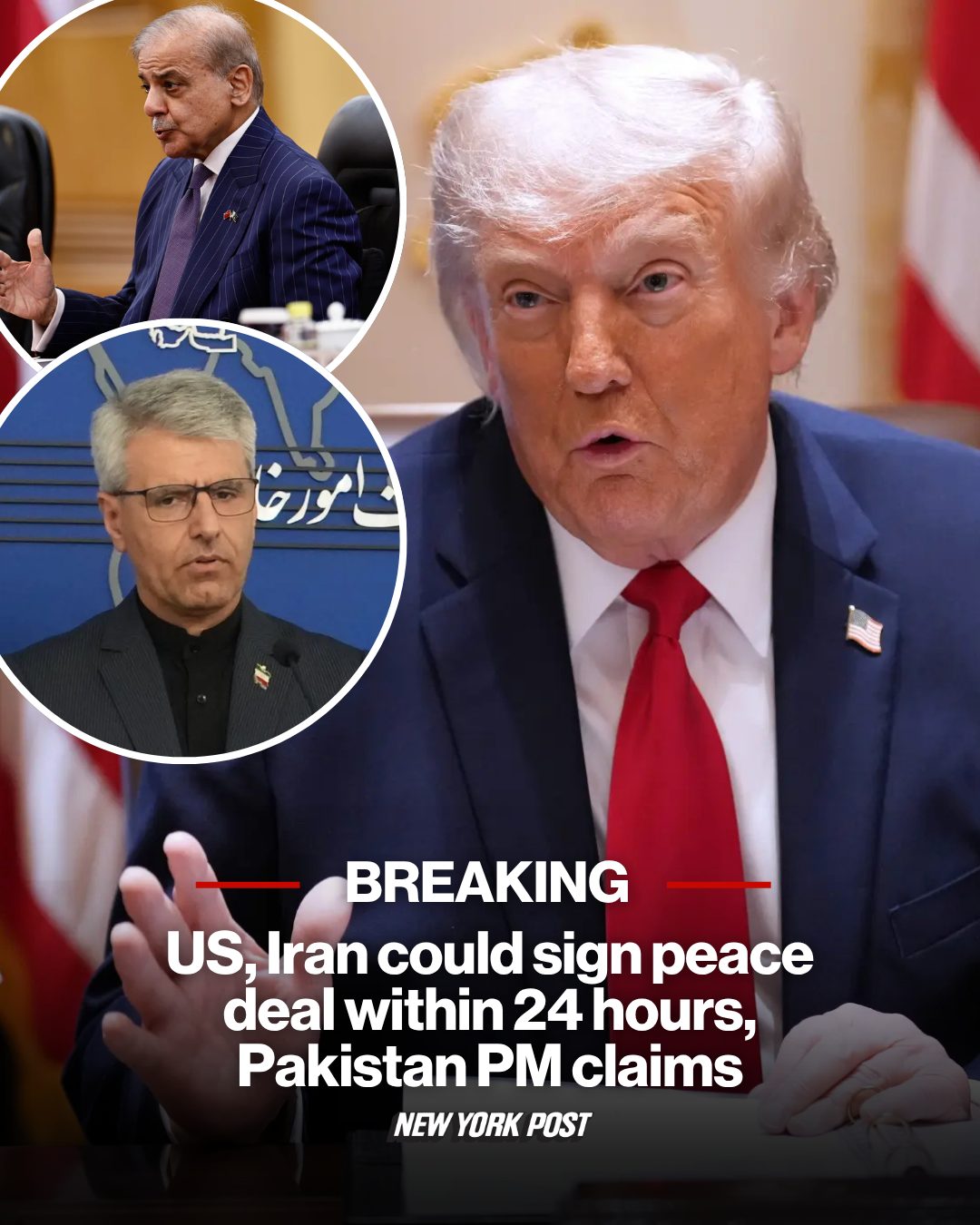
Pakistani Prime Minister Shehbaz Sharif says the finalization of a historic peace agreement ending the US-Iran war is imminent, while Iran's foreign ministry warns that Sunday's signing is not guaranteed.
By CM NEWS World Affairs Desk | June 13, 2026
A historic peace deal between the United States and Iran may be on the verge of becoming reality, according to Pakistani Prime Minister Shehbaz Sharif — the man who has served as the central mediator throughout months of devastating conflict. In a post on X on Saturday, Sharif declared that the two sides are "closer to a peace deal than ever before," adding that finalization is "likely expected in the next 24 hours." However, Iran's foreign ministry has tempered that optimism, cautioning that the deal will not be signed by Sunday, even as all parties acknowledge an agreement has never been this near.
Key Facts
- Pakistani PM Shehbaz Sharif announced Saturday that a US-Iran peace deal could be finalized within 24 hours
- Pakistan is preparing for an electronic signing of the agreement, to be followed by technical-level talks next week
- President Donald Trump stated Thursday that the US had reached "a great settlement of the war with Iran," pending finalization of documents
- Iranian Foreign Minister Abbas Araghchi said a memorandum of understanding "has never been closer" but confirmed signing will not happen Sunday
- Pakistan has served as the primary mediator between Washington and Tehran throughout the conflict
- The war began on February 28, 2026, when US and Israeli strikes targeted Iran; former Supreme Leader Ali Khamenei was killed in the opening strike
- Despite ceasefire momentum, the US shot down Iranian attack drones in the Strait of Hormuz early Saturday, prompting a sharp response from President Trump
The announcement came via Sharif's official X account on Saturday morning, where the Pakistani leader posted that his country is actively preparing for the peace deal's electronic signature. "Pakistan is preparing for the electronic signing of the peace deal immediately after, followed by technical level talks next week," Sharif wrote. [CNBC]
Sharif's statement echoed earlier comments from Iranian Foreign Minister Abbas Araghchi, who on Friday wrote on X that a memorandum of understanding "has never been closer." However, Araghchi stressed in a separate appearance on Iran's Press TV that the agreement had not yet been signed. [Al Jazeera]
The situation took a complicating turn Saturday when Iran's foreign ministry issued a more cautious assessment. A spokesperson for the Iranian foreign ministry said the country is not planning to sign the peace deal by Sunday. "As for the exact timing of the memorandum's signing, we must wait," Foreign Ministry spokesperson Esmaeil Baghaei told Iranian state-owned IRIB media network. [CBS News](https://www.cbsnews.com/live-updates/iran-war-us-trump-peace-deal-agreement/)
Further complicating the picture, the US shot down several Iranian attack drones in the Strait of Hormuz early Saturday. The drones, apparently targeting commercial ships, prompted President Trump to respond by calling the incident "TOTALLY UNACCEPTABLE." [CBS News]
Background: The Road to This Moment
The conflict between the United States and Iran erupted on February 28, 2026, when US and Israeli military operations struck Iranian territory, killing former Supreme Leader Ali Khamenei in the opening hours of the war. The fighting has since caused thousands of casualties across the region and triggered the worst energy supply disruption in modern history, as Iran's closure of the Strait of Hormuz — the chokepoint through which roughly one-fifth of the world's oil and gas transits — sent global energy markets into turmoil.
Pakistan stepped into the role of mediator early in the conflict. In April 2026, Sharif successfully brokered a broader ceasefire announcement, with Iran and the US agreeing to halt hostilities across multiple theaters including Lebanon. That ceasefire paved the way for the Islamabad Talks, where delegations from both sides convened to pursue a lasting resolution.
Trump himself indicated on Thursday that a deal had effectively been reached, telling reporters in the Oval Office that the US had "just made a great settlement of the war with Iran," subject only to "the finalization of documents." [CNBC] A senior administration official subsequently said the US is not "100%" confident the deal will be fully consummated, introducing a note of uncertainty into what had appeared to be a breakthrough moment.
Iran announced Saturday that the funeral for former Supreme Leader Ali Khamenei would take place on July 4. [malaymail] The date carries symbolic weight, given that Khamenei was killed at the very outset of the war that a peace deal would formally end.
Pakistan's Pivotal Role
Pakistan's emergence as the key diplomatic broker in this conflict represents a significant moment in the country's foreign policy history. Islamabad has leveraged its longstanding relationships with both the Islamic world and Western powers to position itself as a credible intermediary — a role that Prime Minister Sharif has pursued personally and persistently.
Sharif separately spoke with Qatari Prime Minister Mohammed bin Abdulrahman bin Jassim Al Thani to thank him for "Qatar's steadfast support for Pakistan's peace efforts throughout the Gulf crisis," noting that the two leaders "exchanged views on the latest developments regarding the landmark peace deal." [CBS News] Qatar has also played a supporting role in the diplomatic process, consistent with its longstanding tradition of facilitating high-stakes negotiations in the Middle East.
Bloomberg confirmed Saturday that Pakistan is preparing for the electronic signing of the peace deal "immediately after" finalization, followed by technical-level talks next week. [Bloomberg] The electronic format of the signing suggests both sides are moving with urgency, bypassing the logistical delays that an in-person ceremony would require.
Analysis: What a Deal Would Mean
A successfully concluded US-Iran peace agreement would carry consequences far beyond the two belligerent nations. The Strait of Hormuz closure has disrupted global oil and gas supply chains for months, pushing energy prices to historic levels and placing extraordinary economic strain on import-dependent nations across Asia, Europe, and Africa. A deal that includes the reopening of the strait would provide immediate relief to global markets.
For the United States, a settlement would represent a major foreign policy milestone for the Trump administration — and a politically significant achievement ahead of the domestic calendar. For Iran, which has endured military strikes and the death of its supreme leader, a negotiated peace offers a path toward reconstruction and international reengagement, albeit from a position of significant loss.
The unresolved question of the Iranian attack drones launched Saturday remains a potential obstacle. While the US military successfully neutralized the threat, the incident demonstrates that elements within Iran's military or security apparatus may not be fully aligned with the diplomatic direction being pursued at the political level.
What Happens Next
If the deal is signed this weekend, technical-level talks between US and Iranian delegations are expected to begin next week, [CBS News] where the practical implementation of any agreement — including terms around the Strait of Hormuz, sanctions relief, and security guarantees — would be worked out in detail.
Iran's foreign ministry has indicated that while Sunday's signing is unlikely, the process remains on track. Both sides appear to have agreed on the broad text of a memorandum of understanding, and the remaining gaps are understood to be procedural rather than substantive. The coming hours will be critical.
Conclusion
The prospect of a US-Iran peace deal represents one of the most consequential diplomatic developments in years, with implications for global energy markets, Middle Eastern stability, and the international order more broadly. Pakistan's Prime Minister Shehbaz Sharif has staked significant political capital on his country's mediation effort, and Saturday's announcement suggests that effort may be on the cusp of delivering results. With Iran urging patience on the timeline and the US expressing cautious confidence, the world watches closely as the next 24 to 48 hours could mark the formal end of a conflict that began with devastating force just months ago.
Follow CM NEWS for live updates on the US-Iran peace negotiations and breaking developments from the 2026 Gulf crisis.