Politics
Trump Says Iran Has Been Militarily Weakened Amid Ongoing Political Debate Over Middle East Policy
The U.S. president claimed that recent conflict has severely reduced Iran's military capabilities, while criticizing political opponents over their assessment of Tehran's current position.
By CM NEWS Staff
Publication Date: June 19, 2026
Introduction
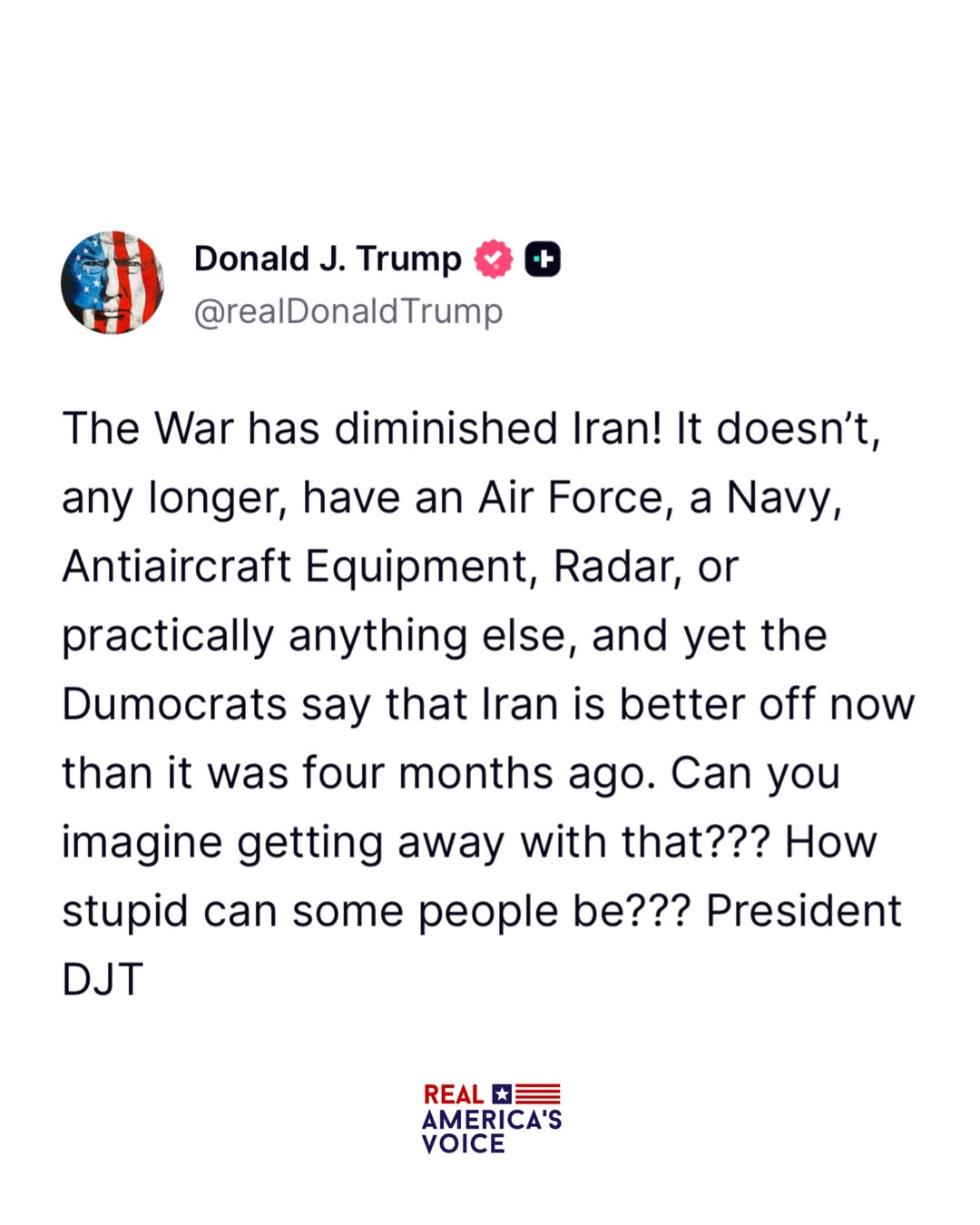
U.S. President Donald Trump has claimed that Iran's military capabilities have been significantly diminished following recent regional conflicts, arguing that the country no longer possesses effective air, naval, and air defense assets. The remarks, shared through social media and reposted by conservative broadcaster Real America's Voice, also included criticism of political opponents who he said believe Iran is in a stronger position than it was several months ago.
The comments come amid heightened tensions in the Middle East and continuing debate in Washington over U.S. policy toward Iran and the broader regional security environment.
Key Facts
President Donald Trump stated that recent conflict has substantially weakened Iran's military capabilities.
He claimed Iran's air force, navy, radar systems, and anti-aircraft equipment have been severely degraded.
Trump criticized political opponents for suggesting Iran may be better positioned than it was months ago.
The remarks were made during an ongoing period of geopolitical uncertainty and heightened scrutiny of Iran's military and strategic capabilities.
Full Story
President Donald Trump used social media to argue that recent military developments have left Iran significantly weakened. In his statement, Trump asserted that the country had lost much of its military infrastructure, including elements of its air force, navy, radar systems, and air defense equipment.
The president's comments quickly drew attention online and reignited debate over Iran's current military status and the effectiveness of regional strategies aimed at limiting Tehran's capabilities.
Trump's remarks also focused heavily on domestic politics. He criticized opponents who, according to him, believe Iran is in a better strategic position today than it was several months ago. The statement reflects the continuing political divide in the United States over foreign policy decisions involving Iran and the Middle East.
Military analysts and government officials have, in the past, cautioned that assessing the full extent of damage to any country's military capabilities can be complex. Governments often release limited information during conflicts, while independent verification may take considerable time.
As a result, experts typically rely on satellite imagery, intelligence assessments, official statements, and independent analyses before reaching definitive conclusions about the operational status of military assets.
Background: U.S.-Iran Relations
Relations between the United States and Iran have remained tense for decades, shaped by disagreements over regional influence, sanctions, nuclear activities, and security concerns in the Middle East.
Successive U.S. administrations have adopted varying approaches toward Tehran, ranging from diplomatic engagement and negotiations to sanctions and military deterrence measures.
Iran, meanwhile, has continued to play a significant role in regional affairs through its military capabilities, strategic alliances, and influence across several parts of the Middle East. Developments involving Iran's military infrastructure often attract global attention because of their potential implications for regional stability, energy markets, and international security.
The Strait of Hormuz, a critical shipping route located near Iran, remains particularly important to global trade and energy supplies. Any escalation involving Iran can influence international markets and raise concerns among governments and investors worldwide.
Expert Analysis
Security experts generally agree that military confrontations can significantly affect a nation's capabilities. However, they also note that determining whether a military has been completely neutralized requires extensive evidence and long-term assessment.
Iran's armed forces consist of multiple branches and include conventional military units as well as various defense systems developed over many years. Analysts often emphasize that military strength cannot be evaluated solely through equipment losses, as factors such as personnel, strategic planning, industrial capacity, and alliances also play major roles.
Trump's statement highlights the broader political debate over how to interpret developments involving Iran. Supporters of a hardline approach argue that increased pressure has weakened Tehran's ability to project power. Critics, meanwhile, contend that long-term geopolitical outcomes require careful analysis and cannot be measured exclusively through immediate military assessments.
Why This Matters
The debate surrounding Iran's military condition extends beyond domestic politics in the United States.
Any significant change in Iran's military capabilities could influence:
Security calculations across the Middle East;
Global energy markets and shipping routes;
International diplomatic efforts involving Iran;
Future U.S. foreign policy decisions in the region.
Statements from major world leaders also play an important role in shaping public perceptions and international discussions about regional stability.
What Happens Next?
Observers are likely to continue monitoring developments involving Iran and assessing available information regarding the condition of its military assets. Governments, intelligence agencies, and independent analysts are expected to provide additional evaluations as more evidence becomes available.
Meanwhile, political debate in Washington over Middle East policy and America's approach toward Iran is expected to remain a prominent issue, particularly as regional security concerns continue to evolve.
Conclusion
President Donald Trump has argued that recent conflict has substantially weakened Iran's military capabilities and used the issue to criticize political opponents' assessment of Tehran's position. While the remarks have generated considerable attention, independent evaluations of Iran's military condition continue to develop, and experts caution that comprehensive assessments often require time and verified evidence.
As tensions in the Middle East persist, the situation remains a key issue for international security, diplomacy, and U.S. foreign policy discussions.