Politics
Trump Predicts Meeting With Iran's New Supreme Leader Mojtaba Khamenei as Nuclear Talks Intensify
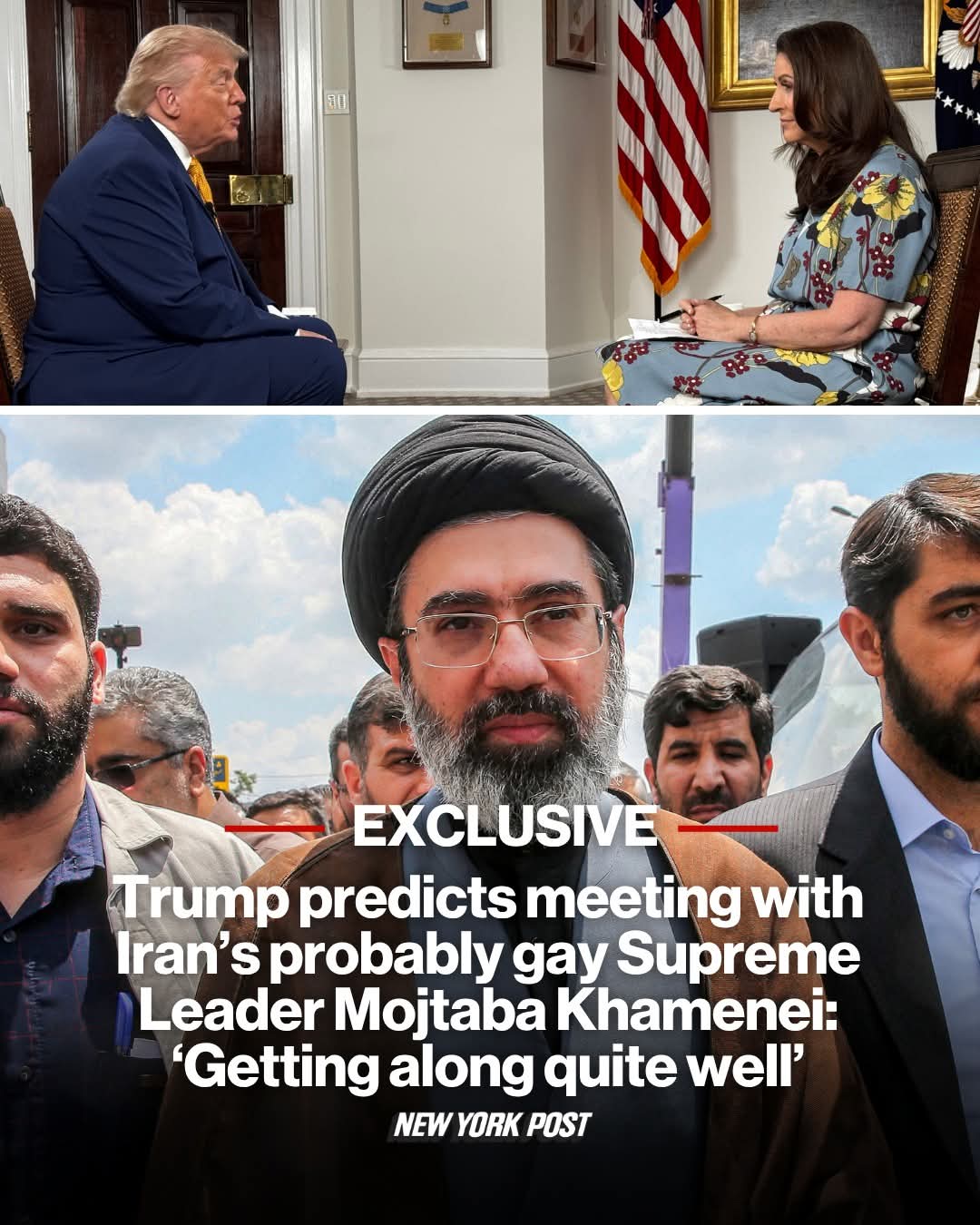
In an exclusive interview, President Donald Trump expressed confidence that a face-to-face meeting with Iran's newly positioned Supreme Leader Mojtaba Khamenei is possible, saying the two sides are "getting along quite well" — even as Khamenei has not been seen publicly since the Iran-Israel war erupted in late February 2026
Byline: CM News Desk
Publication Date: June 3, 2026
United States President Donald Trump has predicted that he will meet with Mojtaba Khamenei — the son of longtime Iranian Supreme Leader Ali Khamenei and widely reported successor to Iran's supreme leadership — describing the current state of back-channel communications between Washington and Tehran as surprisingly constructive. The remarks, made in an exclusive White House interview, come at one of the most sensitive and dangerous moments in US-Iran relations in decades, with Mojtaba Khamenei himself having disappeared entirely from public view since the outbreak of the Iran-Israel conflict on February 28, 2026.
Key Facts
- Who: President Donald Trump and Mojtaba Khamenei, Iran's reported Supreme Leader successor
- What: Trump predicted a potential face-to-face meeting, describing relations as "getting along quite well"
- Source: Exclusive White House interview (New York Post)
- Last public appearance of Mojtaba Khamenei: February 28, 2026 — the day the Iran-Israel war began
- Current diplomatic status: Ongoing US-Iran nuclear and ceasefire negotiations
- Context: Iran-Israel war ongoing since February 28, 2026
- Location of interview: The White House, Washington D.C.
Speaking in an exclusive sit-down interview conducted at the White House, President Trump expressed an unexpected degree of optimism about the possibility of direct engagement with Iran's leadership, stating that communications between the two governments have been progressing better than most outside observers would anticipate.
Trump's comments represent a significant diplomatic signal at a moment of extreme regional volatility. The broader Middle East has been in crisis since February 28, 2026, when a direct military conflict between Iran and Israel erupted — the most serious escalation between the two nations in history. Since that date, Mojtaba Khamenei has not made a single verifiable public appearance, fuelling intense international speculation about his exact role, location, security situation, and the true state of Iran's leadership structure during wartime.
Mojtaba Khamenei, the second son of Supreme Leader Ali Khamenei, has long been considered the most likely successor to his father's position atop Iran's theocratic power structure. Over the past several years he has steadily accumulated influence within the Islamic Revolutionary Guard Corps (IRGC) and among hardline clerical networks in Qom. His public profile, while deliberately kept lower than his father's, has grown significantly — making his complete disappearance from public life since the war's outbreak all the more notable and concerning to international analysts.
Trump's willingness to name Mojtaba Khamenei specifically — and to predict a personal meeting — suggests that the United States has obtained a degree of confidence about who holds actual decision-making authority in Tehran during the current conflict, even if that authority has not been formally announced or publicly confirmed by Iranian state media.
The Iran-Israel War and the Khamenei Succession Question
The conflict that erupted on February 28, 2026, between Iran and Israel marked a dramatic and historically unprecedented escalation from years of proxy warfare and covert operations into direct military confrontation. In the weeks and months since, the conflict has drawn in regional actors, strained global energy markets, and placed enormous pressure on the United States, European powers, and Gulf states to broker a ceasefire.
Against this backdrop, the question of who is truly governing Iran has become one of the most consequential intelligence and diplomatic puzzles in the world. Supreme Leader Ali Khamenei, now in his mid-eighties and reported to be in poor health even before the war began, has made only limited public appearances himself. The Islamic Republic's tightly controlled state media has continued to release statements attributed to his office, but independent verification of his active role in day-to-day decision-making has been difficult.
Mojtaba Khamenei's absence from public life since February 28 has generated multiple competing theories among Iran watchers and intelligence analysts. Some believe he has been moved to a secure undisclosed location as a wartime security precaution — standard practice for leaders of nations engaged in active military conflict. Others have speculated about potential internal power struggles within the IRGC and the clerical establishment. A smaller number of analysts have raised questions about his physical condition, though no credible evidence has emerged to support concerns beyond his absence from public appearances.
What is clear is that any US-Iran diplomatic engagement — whether regarding nuclear agreements, ceasefire terms, or prisoner exchanges — ultimately requires communication with whoever holds real authority in Tehran. Trump's statement that such communication is already producing results suggests that back-channel contacts at a senior level are more advanced than publicly acknowledged.
What a Trump-Khamenei Meeting Would Mean
If a direct meeting between President Trump and Mojtaba Khamenei were to occur, it would represent one of the most significant diplomatic events in the history of US-Iran relations — a relationship defined since 1979 by hostility, sanctions, proxy conflict, and the complete absence of direct high-level engagement.
For Trump, such a meeting would fit a broader pattern of his diplomatic style — a preference for direct leader-to-leader negotiations that bypass traditional diplomatic channels. Trump has previously pursued direct engagement with North Korea's Kim Jong-un and has repeatedly expressed a desire to resolve long-standing international conflicts through personal relationships with foreign leaders.
For Iran, agreeing to such a meeting — particularly if Mojtaba Khamenei were to participate — would signal either a significant shift in the Islamic Republic's foundational ideological position toward the United States, or a pragmatic calculation that direct talks are necessary to achieve Iranian strategic objectives, including sanctions relief and a ceasefire with Israel.
The geopolitical stakes could not be higher. Iran's nuclear programme remains at an advanced stage. The ongoing war with Israel has placed enormous economic strain on both nations. And a US-Iran diplomatic breakthrough could reshape the entire Middle East security architecture — affecting Saudi Arabia, Iraq, Lebanon, Syria, and the Gulf states simultaneously.
For more on this developing story, read CM News' coverage of [the Iran-Israel war and its global impact in 2026] and [Trump's Middle East foreign policy strategy explained].
What Happens Next
The White House has not formally scheduled any meeting between Trump and Iranian leadership, and Iranian state media has not confirmed or commented on Trump's remarks. Diplomatic back-channels between the two governments are believed to be operating through Omani intermediaries, who have historically served as a communication bridge between Washington and Tehran.
International attention will now focus sharply on whether Mojtaba Khamenei makes any public appearance in the coming days — either to respond to Trump's comments, signal Iran's diplomatic posture, or simply demonstrate his continued active role in the Islamic Republic's leadership.
The United Nations and European Union have both called for an immediate ceasefire in the Iran-Israel conflict and have expressed support for any direct diplomatic engagement that could reduce the risk of further regional escalation.
Conclusion
President Trump's prediction of a meeting with Iran's Mojtaba Khamenei — and his characterisation of current communications as "getting along quite well" — represents one of the most surprising and potentially consequential diplomatic signals of 2026. With Khamenei unseen since the war began on February 28, the world is watching closely for any sign of what Iran's leadership is planning next and whether a historic direct dialogue between Washington and Tehran may be closer than anyone publicly anticipated.
CM News will continue to monitor and report on all developments in US-Iran relations and the broader Middle East conflict throughout 2026.
More news [Reuters — Iran-Israel conflict coverage] and [Council on Foreign Relations — Iran Analysis]