Sports
SPAN Launches XFRA to Turn Homes Into AI Data Centers With NVIDIA's Backing
The San Francisco energy startup is betting that millions of underused residential electrical panels could solve one of the biggest bottlenecks in the AI infrastructure boom — without waiting years for new grid connections.
By CM News Staff · Published May 31, 2026 · 5 min read
A San Francisco-based energy technology company called SPAN has unveiled a new distributed computing initiative, XFRA, that aims to transform ordinary homes and small commercial properties into functioning nodes of an artificial intelligence data center network. The project, developed in partnership with chip giant NVIDIA and homebuilder PulteGroup, represents one of the more unconventional responses yet to the surging global demand for AI processing power — and signals a broader shift in how the technology industry is thinking about infrastructure in an era of constrained electricity grids.
What Is XFRA and How Does It Work?
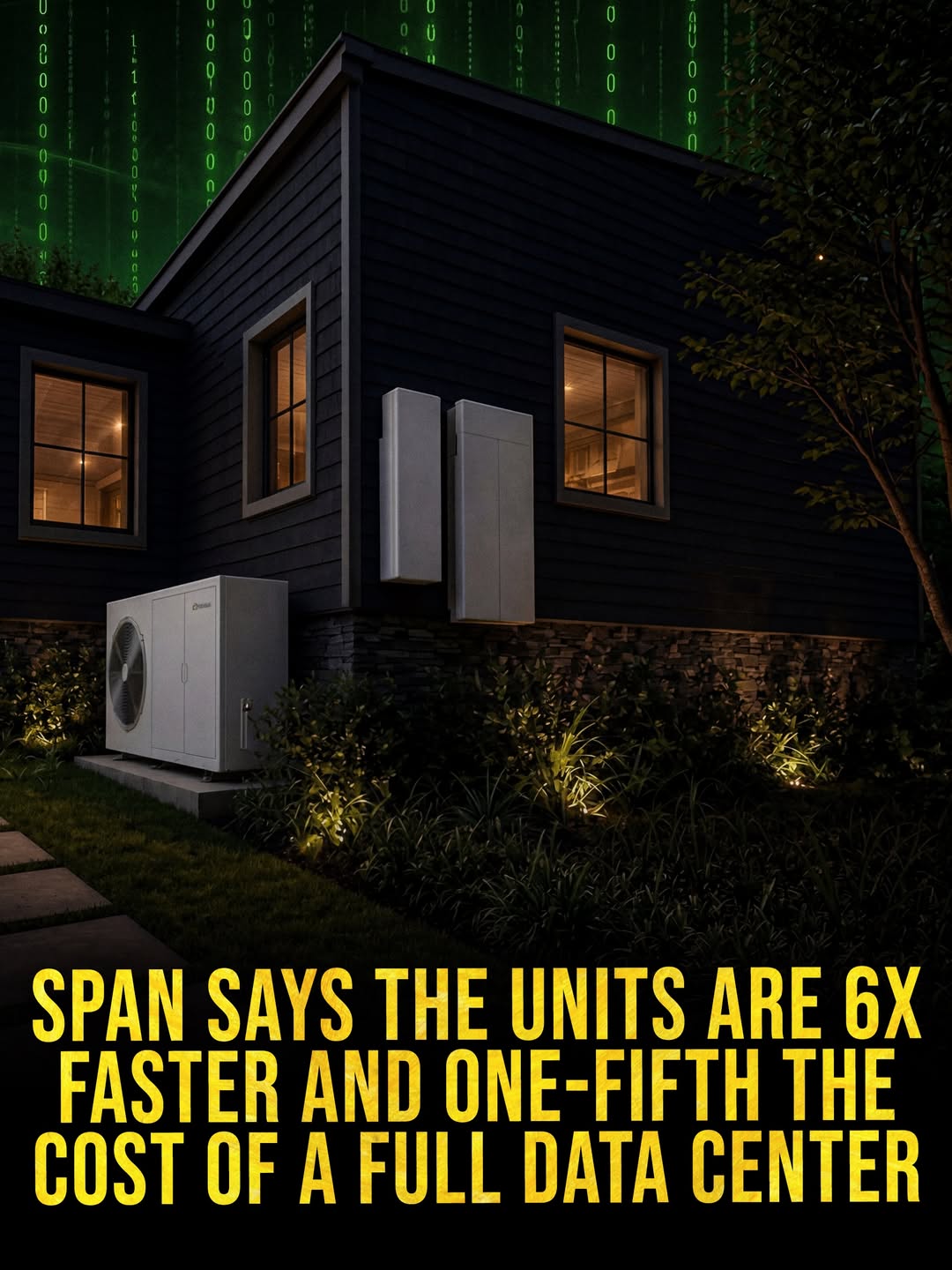
XFRA is designed as a distributed data center network built from the ground up at the residential and small commercial level. Rather than constructing large, centralized facilities that can take years to permit, build, and connect to the power grid, SPAN's approach deploys compact outdoor computing nodes directly at individual properties.
Each node is engineered to house 16 liquid-cooled NVIDIA RTX PRO 6000 Blackwell Server Edition GPUs — some of NVIDIA's most capable inference-class graphics processors. The liquid-cooling system allows high-performance chips to operate in non-industrial environments without overheating, while keeping noise and energy waste to a minimum.
The operational backbone of the system is SPAN's own smart electrical panel. SPAN's core product is a next-generation home energy panel that provides real-time monitoring and management of a property's electricity consumption. XFRA leverages this technology to identify and utilize what the company calls "spare electrical headroom" — the unused capacity that exists in most homes during off-peak hours. Rather than drawing new power from the grid or requiring costly electrical upgrades, the system channels that otherwise wasted capacity into running GPU computations for AI inference tasks.
Why It Matters: The AI Power Crisis
To understand why a company known for smart panels is building AI infrastructure, it helps to understand the severity of the power problem facing the technology industry. Training and running large AI models is extraordinarily energy-intensive, and demand is accelerating. Data centers already consume a significant share of national electricity output in the United States, and projections suggest this figure will grow substantially over the coming decade.
The conventional solution — building new, large-scale data centers — is running into hard limits. Securing grid interconnection agreements can take anywhere from three to seven years in many U.S. markets. Environmental permitting, water rights for cooling, and local community opposition add further delays. The result is a growing gap between AI compute demand and the infrastructure available to meet it.
SPAN's argument is that this gap can be partially closed by aggregating the latent capacity that already exists across millions of residential and commercial properties. A network of thousands of XFRA nodes — each running 16 high-performance GPUs — could collectively offer inference capacity comparable to a mid-sized data center, without requiring a single new grid interconnection.
Partners: NVIDIA and PulteGroup
The involvement of NVIDIA lends the project significant technical credibility. The RTX PRO 6000 Blackwell Server Edition is a professional-class GPU designed specifically for demanding inference workloads in space-constrained environments, signaling that XFRA is a serious attempt at enterprise-level compute density at the residential scale.
PulteGroup, one of the largest homebuilders in the United States, represents the distribution angle of the partnership. By integrating XFRA nodes into new residential developments, SPAN could deploy infrastructure at scale as part of the homebuilding process itself — dramatically accelerating rollout and reducing per-unit installation costs.
Homeowners who participate as hosts are offered a package of incentives in return, including discounted electricity rates, high-speed internet connectivity, backup power capability, and home energy upgrades facilitated through SPAN's smart panel technology.
The Political and Regulatory Climate
The XFRA announcement arrives at a moment of heightened political attention to AI infrastructure. Prediction markets have registered growing concern about potential regulatory action: a contract tracking the likelihood of a U.S. moratorium on new AI data centers before 2027 has climbed to an 85% probability on at least one major forecasting platform. While such figures should be interpreted with caution, they reflect genuine anxiety in policy circles about the pace of AI energy consumption and its implications for grid stability and carbon targets.
Distributed approaches like XFRA may be partly a hedge against this regulatory environment. By spreading compute across residential and small commercial sites rather than concentrating it in large facilities, the model may avoid the scrutiny that large data center projects increasingly attract.
Challenges and Open Questions
XFRA still faces meaningful hurdles. The host economics — discounted electricity and upgrades in exchange for compute participation — will need to work across a wide range of utility markets. Security and data integrity at dispersed residential nodes will require robust protocols. Local building codes, zoning regulations, and utility interconnection rules vary widely across U.S. jurisdictions and add compliance complexity. GPU supply constraints at NVIDIA's server tier also remain a practical concern for scaling the program.
Conclusion
SPAN's XFRA initiative is a notable and creative response to one of the defining infrastructure challenges of the current technology cycle. By combining smart energy management, premium GPU hardware, and a major homebuilder partnership, the company is testing whether the AI industry's power problem can be partially solved at the edges of the grid rather than its center. The concept is ambitious, the technical partnerships are credible, and the timing is strategically astute. Whether it can survive contact with the practical realities of economics, regulation, and scale remains the central question as the project moves from announcement to deployment.
CM NEWS · Independent Technology Reporting ·