Sports
PSG vs Chelsea Spending: Contrasting Transfer Strategies and European Success Under the Spotlight
Massive Investments by Two European Giants Raise Questions Over Results and Long-Term Strategy
By CM Sports News Desk
Published: June 2, 2026
Introduction
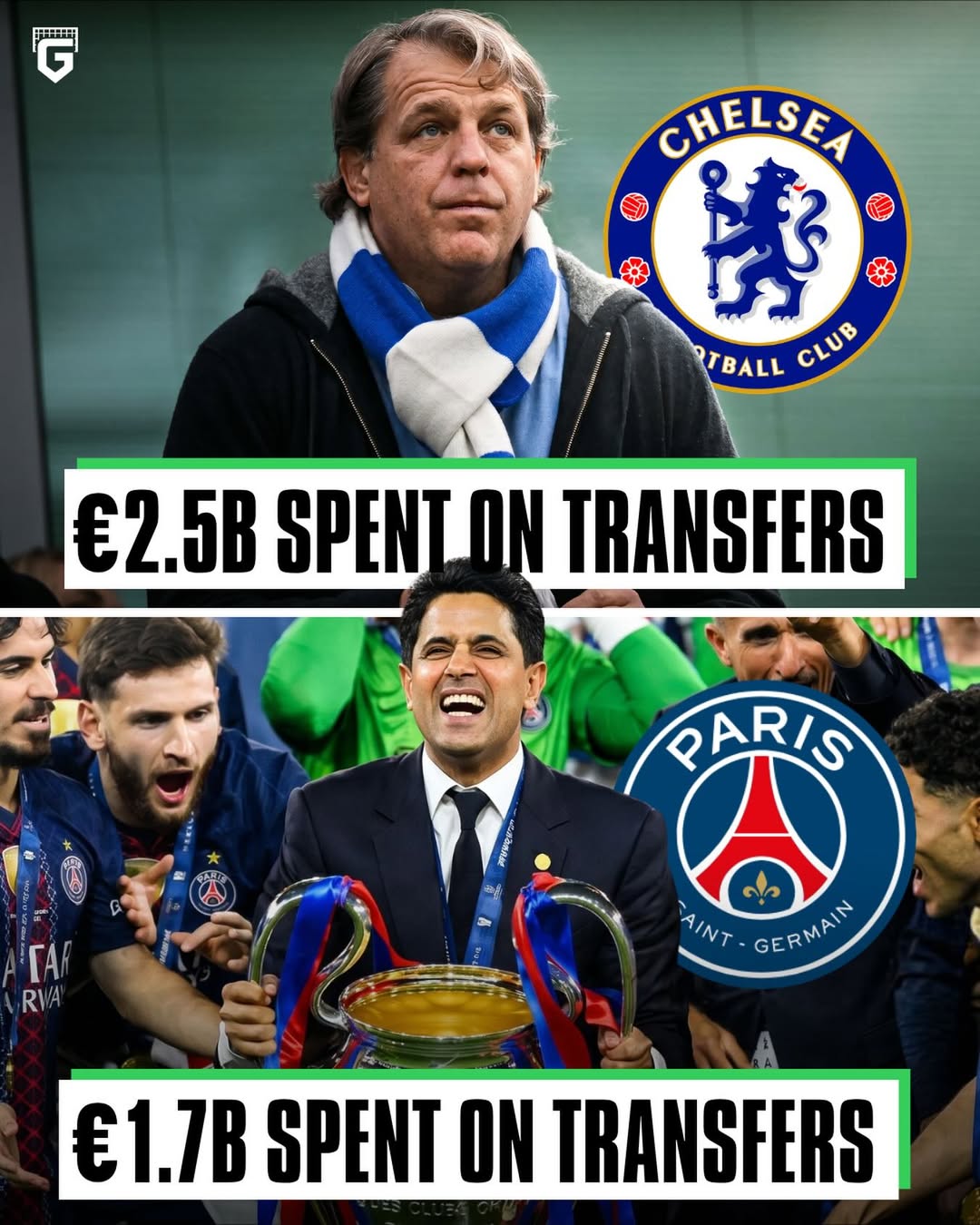
Recent comparisons between Paris Saint-Germain and Chelsea have reignited debate over football spending and success in Europe. Under president Nasser Al-Khelaïfi, PSG have reportedly spent heavily over more than a decade while achieving notable European success. Meanwhile, Chelsea’s recent transfer outlay under co-owner Todd Boehly has yet to translate into comparable results on the continental stage.
The contrast highlights ongoing questions about how financial investment impacts performance, particularly in elite competitions such as the UEFA Champions League.
Key Facts
Paris Saint-Germain ownership era under Nasser Al-Khelaïfi spans over a decade
Chelsea ownership transition to Todd Boehly-led consortium began in 2022
Both clubs have ranked among Europe’s highest spenders in recent years
UEFA competitions remain the primary benchmark for success
Over the past 15 years, Paris Saint-Germain have emerged as one of Europe’s most financially powerful clubs. Backed by Qatar Sports Investments and led by Nasser Al-Khelaïfi, PSG’s strategy has focused on acquiring elite talent to compete for domestic dominance and European glory.
High-profile signings across multiple transfer windows have helped the club establish itself as a consistent contender in the UEFA Champions League. Their investments have also elevated Ligue 1’s global visibility, even as critics argue that domestic competition has often been less balanced as a result.
In contrast, Chelsea’s recent transfer activity has been concentrated within a shorter timeframe. Following the club’s ownership change in 2022, Todd Boehly and his consortium initiated a rapid squad rebuild, committing significant funds to acquire young and emerging players across Europe.
Despite this aggressive recruitment approach, Chelsea have faced challenges in achieving consistent results. Frequent managerial changes, squad integration issues, and tactical adjustments have contributed to uneven performances in domestic and European competitions.
The absence from European qualification in a recent season has intensified scrutiny over the club’s strategy, particularly given the scale of investment involved.
Background: Different Timelines, Different Models
The comparison between PSG and Chelsea is shaped by fundamentally different timelines and structural approaches.
PSG’s investment has been spread across more than a decade, allowing for gradual squad development and strategic planning. The club has combined marquee signings with experienced leadership, creating a framework aimed at sustained competitiveness.
Chelsea, on the other hand, have pursued a more accelerated model. The club’s emphasis on long-term contracts for younger players reflects a strategy focused on future development, though this approach carries inherent risks in the short term.
Historically, Chelsea have experienced periods of success in Europe, including their Champions League triumphs in 2012 and 2021. However, the current phase represents a transitional period as the club adapts to new ownership and sporting direction.
Expert Analysis: Spending vs Success in Modern Football
The comparison underscores a broader trend in modern football: financial investment alone does not guarantee immediate success.
While PSG’s sustained spending has contributed to their prominence, their journey in the Champions League has also included setbacks and near-misses. Success in elite competitions often depends on factors beyond transfers, including squad cohesion, managerial stability, and experience in high-pressure situations.
Chelsea’s situation illustrates the challenges of rapid transformation. Integrating a large number of new players within a short period can disrupt team chemistry and delay results, even when individual talent is evident.
Football analysts frequently emphasize the importance of long-term planning and organizational stability. Clubs that balance financial investment with coherent sporting strategies are generally better positioned to achieve consistent success.
What Happens Next
Looking ahead, both clubs face pivotal moments in their respective projects.
For PSG, the focus remains on maintaining their status as European contenders while continuing to compete for top honors. Sustaining success will depend on evolving their squad and adapting to increasing competition across Europe.
Chelsea, meanwhile, are expected to prioritize stability and performance improvement. Building cohesion within the squad and securing qualification for European competitions will be key objectives in the coming seasons.
The effectiveness of their long-term strategy under Todd Boehly will likely be evaluated based on progress over the next few years rather than immediate results.
Conclusion
The comparison between Paris Saint-Germain and Chelsea reflects the complexities of modern football economics. While both clubs have invested heavily in their squads, their differing timelines and approaches have produced contrasting outcomes.
Ultimately, the relationship between spending and success remains nuanced. Financial power can create opportunities, but sustained achievement at the highest level requires strategic planning, stability, and execution.
As European football continues to evolve, the experiences of PSG and Chelsea offer valuable insights into how clubs navigate the balance between ambition and performance.