Sports
Iran's World Cup Players Granted U.S. Visas in Last-Minute Clearance Ahead of FIFA 2026
White House confirms visa approval for Iran's national football squad just 10 days before their Group G opener in Los Angeles, ending weeks of diplomatic uncertainty
By CM News Desk | June 6, 2026
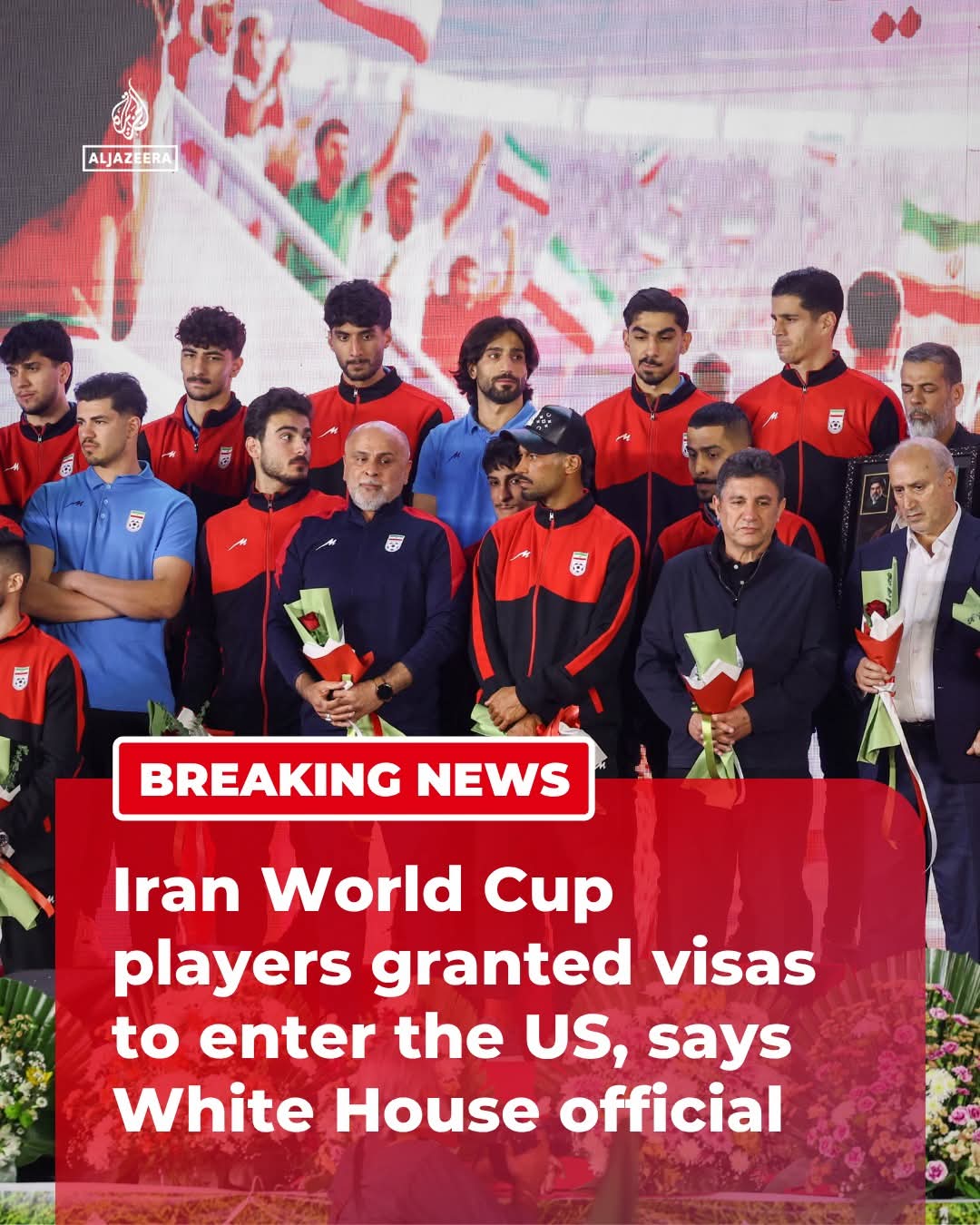
In a significant diplomatic development on the eve of the 2026 FIFA World Cup, Iran's national football team players have been granted visas to enter the United States, a White House official confirmed on Friday. The approval, described as an overnight decision, clears the way for Team Melli to compete in their group-stage fixtures scheduled for Los Angeles and Seattle — and comes just ten days before Iran's opening match, resolving one of the most politically charged visa disputes in the tournament's history.
Key Facts
- Iran's squad visas were confirmed by a White House official on Friday, June 5, 2026
- The approval came overnight, just hours after Iran's ambassador to Mexico stated no visas had been received
- Iran is set to play Group G matches: vs. New Zealand (June 15, Los Angeles), vs. Belgium (Los Angeles), and vs. Egypt (Seattle)
- The team will be based in Tijuana, Mexico — not on U.S. soil — due to ongoing political tensions and sanctions
- Visas for some technical and administrative staff members had still not been issued as of Friday
Iran's World Cup football players were granted visas to enter the United States just 10 days before their first match in Los Angeles, amid an ongoing conflict between the two nations. Iran's ambassador to Mexico, Abolfazl Pasandideh, had said late on Thursday that the squad had still not received their visas — but these were granted overnight, according to the White House official. [Al Jazeera]
U.S. Ambassador to Turkey Tom Barrack confirmed the development on the social media platform X, expressing pride in the work of the U.S. Embassy in Ankara for processing the visas and stating that "sports transcends borders" and that the U.S. looks forward to welcoming competitors and fans from around the world. [ABC News]
Despite the player visas being secured, not all personnel associated with the Iranian squad received clearance. Visas for some members of the national team's technical and executive staff had not yet been issued, with the U.S. Embassy reportedly refusing to grant them, according to Iran's semi-official Fars news agency. [The Business Standard]
Months of Diplomatic Tension
The road to this visa approval has been anything but smooth. Tensions first flared publicly in December 2025 when Iran's Football Federation announced it would boycott the FIFA World Cup draw in Washington, D.C., after the U.S. denied visas to several senior delegation members, including federation President Mehdi Taj. The federation described the U.S. action as "non-sporting" and formally notified FIFA of its withdrawal from the ceremony. [gulfnews]
That episode set the tone for months of back-and-forth that tested both the sporting ideal of political neutrality and the real-world constraints of U.S.-Iran relations.
Secretary of State Marco Rubio made clear earlier this week that while the Trump administration had no objection to providing visas to Iran's athletes, it would not allow the Iranian government to embed individuals with ties to the Islamic Revolutionary Guard Corps (IRGC) within its World Cup delegation. "What we're not going to allow is for them to embed in their delegation a bunch of people that we know have nothing to do with athletics and have ties to the IRGC or things of that nature," Rubio told lawmakers on Capitol Hill. [ABC News]
Team to Base Itself in Mexico, Not the U.S.
Even with visas in hand for the players, Iran's presence on American soil will be deliberately limited. Tehran negotiated a last-minute move of the team's base from Arizona to Tijuana, Mexico, due to the visa complications and a growing sentiment within Iran that the squad's presence inside the United States should be kept to a minimum. [News Nation Now] The team is scheduled to land in Tijuana early on Sunday. [Al Jazeera]
This arrangement means Iran's players will cross the U.S. border only for their scheduled matches — a pragmatic compromise that allows them to compete while satisfying political sensitivities on both sides.
Sport at the Intersection of Geopolitics
This World Cup marks a historic and uncomfortable first. It is the first FIFA World Cup since the tournament's inception in 1930 in which a host nation is set to receive a national team from a country it is at war with. [The Business Standard] The United States and Iran have been in a state of open conflict, and the Iran war has transformed the world's largest sporting event into a stage for geopolitical posturing.
The decision to grant visas, while last-minute, signals that sporting competition — and perhaps the diplomatic and commercial value of the tournament — ultimately outweighed the impulse to further restrict Iran's participation. FIFA, which has been working with U.S. authorities to ensure all 48 qualified nations can compete, will likely view the development as a relief.
For Iran's footballers, the episode has underscored the uncomfortable reality that their participation in the biggest stage of their careers has been entangled in forces entirely beyond their control. The team qualified through merit; whether they could compete came down to diplomacy.
What Happens Next
Iran will travel to Tijuana ahead of their Group G opener against New Zealand on June 15 at SoFi Stadium in Los Angeles. They will also face Belgium in Los Angeles before a final group-stage fixture against Egypt in Seattle. Whether any remaining staff visa issues will be resolved before the tournament kicks off remains unclear.
The situation will continue to be closely watched by FIFA, human rights organizations, and football supporters globally — all of whom have an interest in how the world's most-watched sporting event navigates one of its most politically sensitive participant relationships in modern history.
Conclusion
The last-minute granting of U.S. visas to Iran's World Cup squad removes a major obstacle to one of 2026's most geopolitically charged storylines. While diplomatic tensions between Washington and Tehran remain unresolved, the decision ensures that Iran's players will not be punished for politics beyond their control. With their World Cup debut just ten days away, Team Melli can now focus on football — though the eyes of the world will be watching for more than just goals.
For more World Cup 2026 coverage, follow CM NEWS for live updates, match previews, and breaking football news throughout the tournament.