Politics
Iran Suspends US Peace Negotiations and Threatens Full Strait of Hormuz Blockade After Fresh Israeli Strikes on Beirut
Tehran halts diplomatic back-channel talks with Washington and warns of sweeping economic retaliation as Israeli military operations in Lebanon threaten to unravel a fragile ceasefire
By CM NEWS World Affairs Desk | June 1, 2026
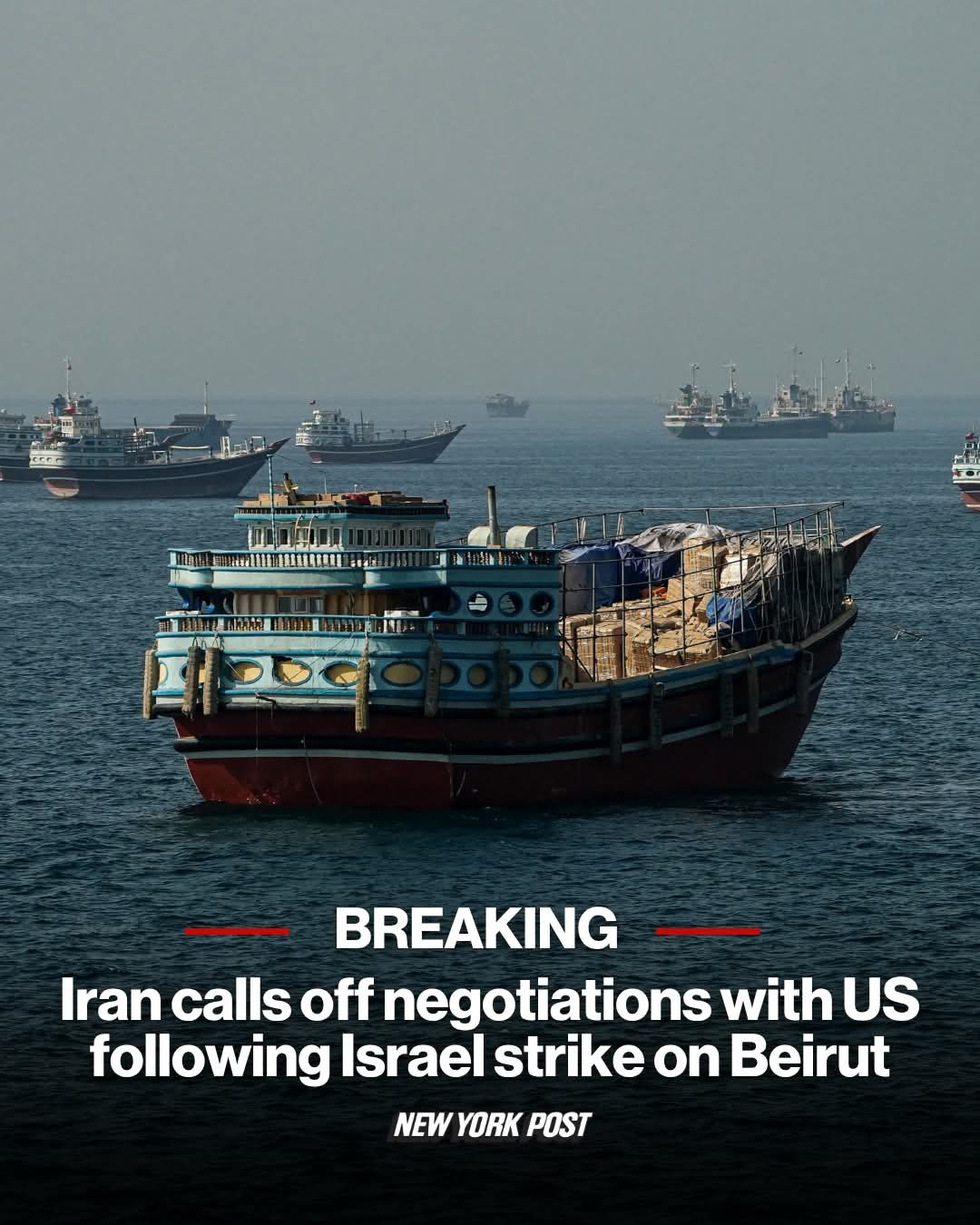
A diplomatic crisis erupted on Monday as Iran announced it was suspending all peace negotiations with the United States, citing continued Israeli strikes on Beirut as a fundamental violation of the ceasefire agreement reached in April. The move dramatically escalates tensions in an already volatile region and sends shockwaves through global energy markets — with Tehran simultaneously threatening to impose a complete blockade of the strategically critical Strait of Hormuz.
The development marks one of the most serious ruptures in the fragile US-Iran diplomatic process since a conditional ceasefire was first agreed in April 2026, raising fears of a return to full-scale conflict.
Key Facts
- Iran's negotiating team has suspended all back-channel communications with the United States
- The decision was triggered by ongoing Israeli military operations targeting Beirut and southern Lebanon
- Iran is threatening a complete closure of the Strait of Hormuz and activation of the Bab al-Mandeb Strait as pressure points
- The ceasefire, brokered in April with Pakistani mediation, is now under severe strain
- Global oil prices, which had retreated in recent weeks on hopes of a deal, are under renewed upward pressure
What Happened
Iran's state-affiliated news outlet Tasnim reported on Monday that Iranian negotiators would stop exchanging messages with the United States through intermediaries, and that Tehran would move to fully close the Strait of Hormuz in retaliation for ongoing ceasefire violations. The report focused on Israel's military operations in Lebanon against the Iran-backed militia Hezbollah, with Tasnim stating that "no dialogue will take place" until Israel fully withdraws from occupied areas in Lebanon and stops all attacks in both Lebanon and Gaza. [CNBC]
Iran's negotiating team cited what it described as ceasefire violations as the basis for suspending the peace talks, according to the semi-official Tasnim news agency. [CBS News]
Adding to the alarm, Iran also declared that "the resistance front and Iran have resolved to completely block the Strait of Hormuz and activate other fronts including the Bab al-Mandeb Strait, in order to punish the Zionists and their supporters." [CNBC]
The Israeli Strikes That Triggered the Crisis
The immediate catalyst was a wave of Israeli airstrikes on Beirut. The Israeli military warned residents of the southern suburbs of Beirut, Lebanon, to flee their homes amid potential impending strikes, saying it would target locations in the suburb of Dahiyeh if Hezbollah continued launching rockets towards Israeli cities and towns. [ABC News ]
Lebanese Foreign Minister Abbas Araghchi stated that the world was watching massacres in Lebanon, and said the ball was in the US court as to whether it would act on its commitments. Lebanon's Health Ministry had previously reported that Israeli strikes killed 182 people in a single day — the highest single-day death toll in the Israel-Hezbollah conflict — with a total of 1,739 people killed and 5,873 injured in Lebanon in just over five weeks of war. [newsonair]
The scale of destruction in Lebanon has become the defining flashpoint in the Iran-US diplomatic process, with Tehran insisting the strikes represent a direct violation of the terms under which the ceasefire was agreed.
Background: How the Ceasefire Came About
To understand why Monday's announcement carries such weight, it is necessary to understand the diplomatic architecture that preceded it. On February 28, 2026, Israel and the United States began a series of strikes against Iran, targeting its nuclear and ballistic missile programmes with the stated aim of inducing regime change. A conditional ceasefire was declared on April 8. [House of Commons Library]
As part of the ceasefire, Iran agreed to allow safe passage through the Strait of Hormuz for a period of two weeks, in coordination with Iran's armed forces and subject to technical limitations. [newsonair] The agreement was brokered by Pakistani mediators, with Islamabad serving as a back-channel between Washington and Tehran.
The broad strokes of the memorandum of understanding included a 60-day cessation of violence, clauses calling for reopening the strait, and a framework to reopen negotiations on Iran's nuclear programme. The arrangement also involved the potential for waivers or sanctions relief that could allow Iran to access billions in frozen assets depending on diplomatic progress. [CBS News]
However, the deal contained a crucial and contentious gap: Israeli Prime Minister Benjamin Netanyahu's office stated that it supported Trump's decision to suspend strikes against Iran but clarified that the ceasefire did not include the war with Hezbollah in Lebanon. [newsonair] That ambiguity has now come to a head.
The Strait of Hormuz: A Global Economic Pressure Point
Iran's threat to fully close the Strait of Hormuz is not merely symbolic. About one fifth of the world's oil supplies passed through the strait before the US and Israel first attacked Iran on February 28. Ship traffic through the strait has remained effectively choked off since the start of the war due to Iran's blockade. Barrel prices for Brent and WTI crude oil, while still highly elevated from their pre-war levels, had retreated by double-digit percentages in recent weeks as investors grew optimistic about the prospect of a deal that would fully reopen the strait — but some of that optimism appears to have evaporated following Monday's developments. [CNBC]
Should Iran follow through on its threat to also activate the Bab al-Mandeb Strait as a second pressure point, the consequences for global energy supply chains would be severe, potentially driving oil prices to levels not seen since the early weeks of the conflict.
Analysis: A Ceasefire on the Brink
Monday's announcement exposes the fundamental structural weakness in the US-Iran ceasefire: the inability — or unwillingness — of Washington to restrain Israel's military operations in Lebanon. From Tehran's perspective, agreeing to a ceasefire with the United States while Israeli forces continue to strike Beirut and kill hundreds of Lebanese civilians represents an untenable position domestically and diplomatically.
US Vice President JD Vance had previously warned Iran that it would be "dumb" to jeopardise its ceasefire with Washington over Israel's attacks in Lebanon, saying it would be Iran's "choice" to let negotiations fall apart over the Lebanon situation. [newsonair] That warning has now been put to the test — and Tehran has chosen to walk away.
For the United States, the challenge is acute. Washington cannot easily compel Israel to stand down in Lebanon without triggering a domestic and geopolitical crisis of its own. Yet without some form of Israeli restraint, Iran has signalled it will not return to the negotiating table.
What Happens Next
American and Iranian diplomats had been set to meet in Pakistan, but a wide gulf of trust and a lack of clarity now threatens this possible pathway to ending the conflict. [ABC News] Whether those talks proceed — or whether Monday's announcement represents a permanent rupture — depends largely on what happens in Beirut in the coming days.
Secretary of State Marco Rubio has spoken with both Lebanese President Joseph Aoun and Israeli Prime Minister Benjamin Netanyahu regarding ongoing negotiations between the two countries, as Israel expanded its offensive against Hezbollah in southern Lebanon. [ABC News] The outcome of those conversations will be closely watched.
Global markets, oil traders, and governments from Europe to Asia will be monitoring developments closely. Any further escalation — particularly any Iranian military action in the Strait of Hormuz — would have immediate and severe consequences for global energy prices and economic stability.
Conclusion
The suspension of Iran-US negotiations represents a critical setback for diplomatic efforts to stabilise the Middle East following months of intense conflict. The ceasefire framework, painstakingly assembled through Pakistani mediation, now hangs by a thread — contingent on whether Israel halts its operations in Lebanon and whether the United States can find a way to bridge the gap between its diplomatic commitments to Iran and its alliance obligations to Israel. The world watches closely as both sides weigh their next moves.
CM NEWS will continue to monitor this developing story. For background on the broader Iran-US conflict timeline, see our full coverage on the 2026 Middle East Crisis.