Sports
FIFA World Cup 2026: Three Nations, One Tournament — The Story Behind Football's Most Historic Hosting Arrangement
With three days to go until kick-off, the 2026 FIFA World Cup stands as the most ambitious, far-reaching, and consequential tournament in the sport's 96-year history. Here is everything you need to know about why this edition is different — and why it matters.
By CM NEWS Sports Desk | June 8, 2026
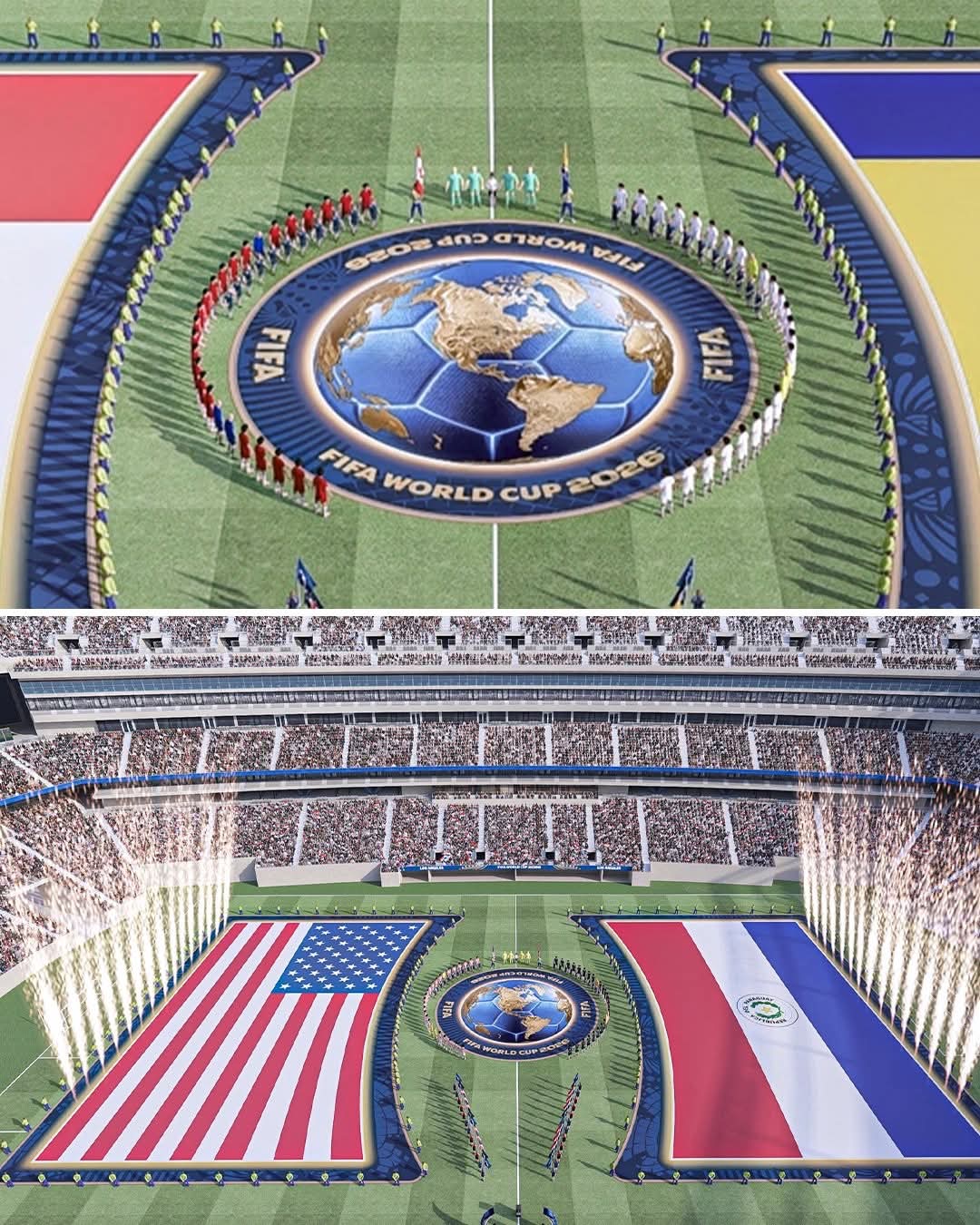
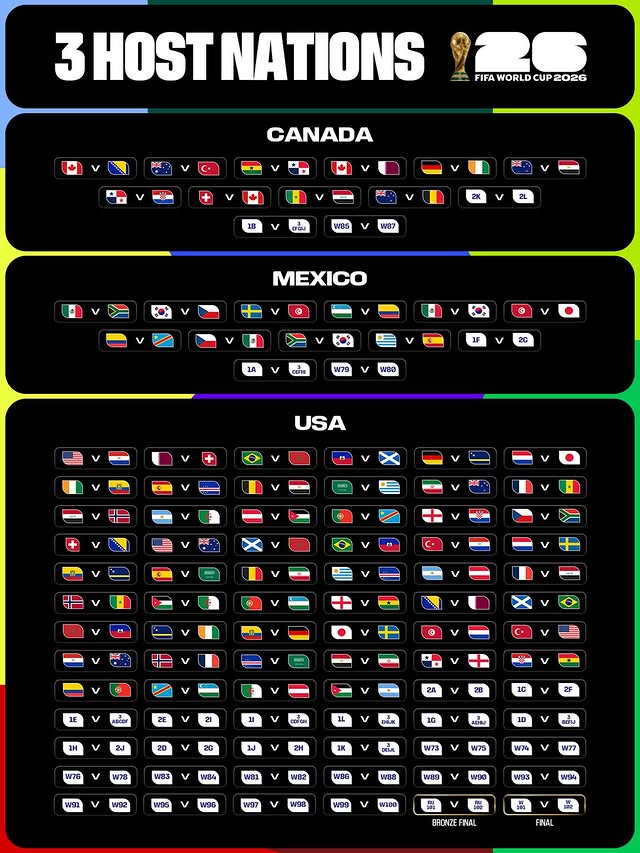
Three nations. Sixteen cities. Forty-eight teams. One hundred and four matches. The 2026 FIFA World Cup, which kicks off on June 11, represents a fundamental reimagining of what the world's greatest sporting event can be. For the first time in the history of the tournament, three sovereign nations — the United States, Canada, and Mexico — are sharing hosting duties, creating a continental football festival that stretches from Vancouver on Canada's Pacific coast to the suburbs of New York City, with stops across Mexico's most iconic stadiums along the way. This is not simply a bigger World Cup. It is a structurally different one — and its significance extends far beyond the pitch.
Key Facts
- Tournament dates: June 11 – July 19, 2026
- Host nations: United States (11 cities), Canada (2 cities), Mexico (3 cities)
- Total venues: 16 stadiums across 16 cities
- Teams: 48 — up from 32 in Qatar 2022
- Total matches: 104
- Opening match: Mexico vs. South Africa, Mexico City — June 11
- Final: New York New Jersey Stadium, East Rutherford — July 19
- Projected global economic impact: $40.9 billion GDP, 824,000 jobs
A First in Football History: Three Nations, One World Cup
The 2026 FIFA World Cup is the first time in the tournament's history to be hosted by three nations. The last time North America hosted the tournament was in 1994, when Brazil triumphed after beating Italy on penalties. [Sky Sports]
The last time the World Cup was co-hosted by multiple countries was the 2002 edition, when Japan and South Korea shared duties — with Brazil defeating Germany in that final to claim a record fifth title. [Visual Capitalist] The 2026 edition takes the multi-nation concept to a scale previously unimagined, spanning two time zones, three distinct football cultures, and thousands of kilometres of geography.
The United States will host 78 matches, including all games from the quarter-finals onward. Canada and Mexico will each host 13 matches, primarily in the group stage. The opening match is in Mexico City. The final will be held at the MetLife Stadium in New Jersey. [LiveScore]
The three-country format was not conceived by accident. It was the only realistic way to stage a 48-team World Cup in North America while meeting FIFA's venue requirements and maximising the commercial return. FIFA projections suggest the tournament could attract up to 6.5 million visitors and contribute around $40.9 billion to the combined GDP of the three host nations. [LiveScore]
Mexico's Place in History
Of the three host nations, Mexico carries a unique distinction. With the 2026 tournament, Mexico is officially the first country in the world to host the FIFA World Cup three times, having previously staged the event in 1970 and 1986. [Visual Capitalist]
No host nation carries a deeper emotional connection to the FIFA World Cup than Mexico. With generations of fans shaped by iconic tournament moments, El Tri returns to the global stage determined to make history once more. [FIFA World Cup 26 Hospitality] Mexico's three host cities — Mexico City, Guadalajara, and Monterrey — are among the most passionate football environments on the continent, and the opening match on June 11 in the capital is expected to set the tournament alight in front of an electric crowd.
Canada's Moment of Arrival
For Canada, 2026 carries a very different kind of significance. Canada's rise on the international stage has been one of football's most exciting recent stories. After returning to the FIFA World Cup in 2022 following a 36-year absence and investing heavily in youth development and infrastructure, the nation steps into hosting duties with confidence and belief. For Canada, 2026 is a moment of arrival — a chance to win a FIFA World Cup match for the first time ever, and a chance to showcase a new football identity built on athleticism, tactical discipline, and fearless attacking play. [FIFA World Cup 26 Hospitality]
Canada's two host cities are Toronto and Vancouver — two of North America's most cosmopolitan and internationally connected urban centres, perfectly suited to showcase the tournament to a global audience.
The United States: Home Soil, Highest Stakes
The United States last hosted the World Cup in 1994 — a tournament that, despite widespread scepticism at the time, became one of the most-attended in the event's history and played a transformative role in the growth of professional football in the country. Thirty-two years later, the game has grown immeasurably in American life, and the arrival of the World Cup on home soil carries a weight and expectation that was simply not present in that earlier edition.
The United States leads all three host nations with 11 host cities, and American venues will stage every match from the quarter-finals onward, culminating in the final at the New York New Jersey Stadium in East Rutherford, New Jersey on July 19. [Futbol Update]
Team USA enters as a legitimate contender on their own soil. Ranked 16th in the world and placed in a manageable Group D alongside Paraguay, Australia, and Türkiye, the Americans have every opportunity to advance deep into the knockout rounds — a feat that would captivate a nation and cement football's growing place in American sporting culture.
The Scale: 104 Matches, 16 Cities, 39 Days
The sheer logistical scale of the 2026 World Cup is without precedent. Spanning 39 days — longer than any World Cup in history — the tournament features 104 matches, 16 venues, and a new knockout structure that begins with a Round of 32 and proceeds through to the final. [Tinhn]
The new 48-team format allows the eight best third-placed teams to qualify for the knockout rounds, meaning some nations can advance even if they finish third in their group. [ToffeeWeb] This structural change dramatically increases the stakes of every group-stage match, ensuring that no game is truly without consequence until the very end of the group phase.
The 16 host cities span an extraordinary range of environments, cultures, and stadiums — from the altitude of Mexico City to the modern NFL venues of Dallas and Los Angeles, and from the lakeside skyline of Toronto to the dense urban backdrop of the New York metropolitan area. Each city brings its own flavour to the tournament, creating an experience for travelling fans unlike anything the World Cup has previously offered.
The Economic Impact: A $40 Billion Opportunity
The financial scale of the tournament is as significant as its sporting ambitions. An official study estimates the tournament could generate up to $40.9 billion in global GDP and 824,000 full-time jobs worldwide. [World Economic Forum]
Specifically for the United States, estimates project 185,000 full-time equivalent jobs could be created, with $30.5 billion in gross output and $17.2 billion in GDP contribution. [FIFA]
However, not all analysts are convinced the full benefit will materialise. A survey of more than 200 hotels across the 11 US host cities found that nearly 80% reported bookings tracking below initial forecasts [Euronews] , raising questions about whether the projected tourism boom will translate into reality. Factors including ticket pricing, inflation concerns, and a broader cooling in international travel to the United States have tempered expectations in some host cities.
Mexico's host cities — Guadalajara, Monterrey, and Mexico City — are positioned to feel the economic effect most acutely, with an estimated $3 billion in anticipated economic benefits representing between 0.2% and 0.5% of Mexican GDP depending on the model used. [Euronews]
Analysis: Why This World Cup Is Different
Several factors make the 2026 edition genuinely unlike anything that has come before.
First, the scope. A tournament spread across three nations and 16 cities creates a travelling carnival of football that rewards fans in more places than ever before. Whether you are in Vancouver, Kansas City, or Monterrey, the World Cup is coming to a stadium near you.
Second, the format. The new Round of 32 gives 32 nations a place in the first knockout round, making every group-stage result more consequential and giving underdogs more room to recover after a difficult start. [World In Sport] More matches mean more stories, more upsets, and more of the drama that makes the World Cup the most watched sporting event on earth.
Third, the context. Cape Verde, Curaçao, Jordan, and Uzbekistan are all making their World Cup debuts at this tournament, while Haiti and the Democratic Republic of the Congo are making their first appearances since 1974. [Visual Capitalist] The expansion of the field to 48 nations is not merely a commercial decision — it is a genuine broadening of football's global reach, bringing new nations into the tournament's story for the first time.
What Happens Next
With three days until the opening whistle in Mexico City, preparations across all three host nations are in their final stages. Players from 48 countries are arriving at their base camps, millions of fans are making their final travel plans, and broadcasters across every continent are ready to begin what promises to be six weeks of unmissable football.
The 2026 FIFA World Cup is more than a tournament. It is the first World Cup of a new era — bigger, more inclusive, and more geographically ambitious than any that came before it. When Mexico face South Africa at the Estadio Azteca on June 11, a piece of football history will begin.
Conclusion
Three nations. Forty-eight teams. One hundred and four matches. The numbers alone make the 2026 FIFA World Cup historically significant, but the true story of this tournament lies in what it represents: the arrival of football at a genuinely new scale, on a continent that has spent three decades building toward this moment. From Canada's long-awaited home debut to Mexico's unprecedented third hosting chapter to the United States staging football's biggest event in its own backyard, the 2026 World Cup is a shared continental event with the potential to redefine the sport across North America for a generation.
Read also:
1. [ FIFA World Cup 2026 new rules explained ]
2. [ everything American fans need to know about World Cup 2026 ]
3. [FIFA's official 2026 World Cup hub ]
4. [World Economic Forum World Cup economic impact analysis]