Sports
FIFA Confirms Six Women Match Officials for 2026 World Cup in Historic Step for Global Football
Female Referees and Officials Selected Among Record 170-Member FIFA Match Officiating Team
By CM NEWS Sports Desk
Publication Date: June 10, 2026
Introduction
FIFA has confirmed that six women will serve as match officials at the 2026 FIFA World Cup, marking another significant milestone in the continued integration of female referees into the men's global football showpiece. The women are part of a record-breaking group of 170 match officials selected to oversee matches during the tournament, which will be hosted across the United States, Canada, and Mexico.
The selected officials include two center referees, three assistant referees, and one video match official. Their appointments continue the progress first highlighted at the 2022 FIFA World Cup in Qatar, where women officiated matches in the men's tournament for the first time.
Key Facts
FIFA has appointed 170 match officials for the 2026 FIFA World Cup.
The officiating team includes 52 referees, 88 assistant referees, and 30 video match officials.
Six women have been selected among the officials.
The tournament will be hosted by the United States, Canada, and Mexico.
The 2026 World Cup will feature 48 teams and a record 104 matches.
Full Story
The six women selected for the 2026 FIFA World Cup represent several countries and officiating roles across international football.
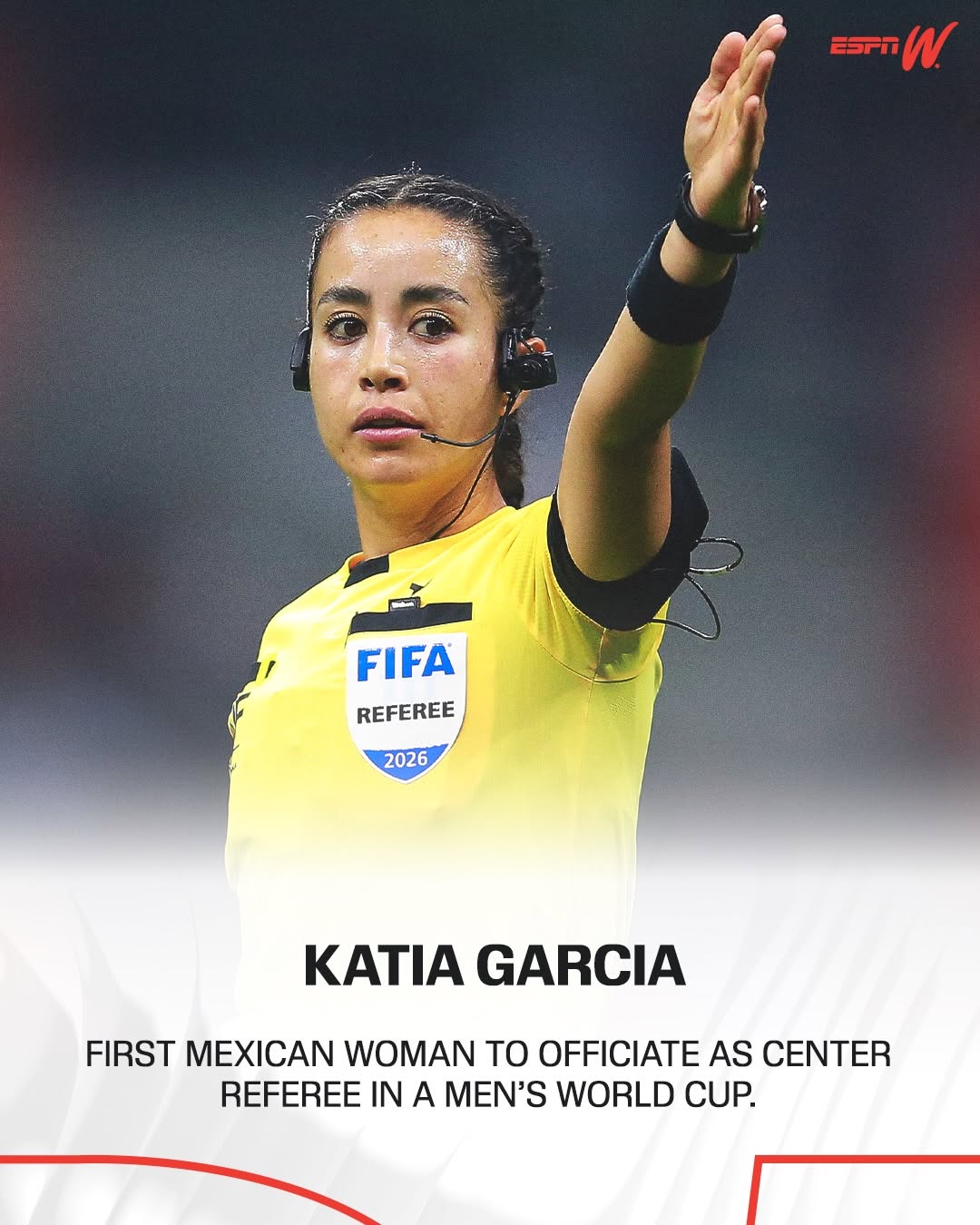
The two female center referees chosen are Tori Penso of the United States and Katia García of Mexico. Their selection reflects FIFA's continued confidence in female officials at the highest levels of men's football.
Penso has already built an impressive international reputation and becomes the first American woman selected as a head referee for a men's FIFA World Cup. Meanwhile, García continues to break barriers for Mexican football, having previously become the first Mexican woman to officiate as a center referee at a men's World Cup competition.
Supporting them are three assistant referees:
Kathryn Nesbitt (United States)
Brooke Mayo (United States)
Sandra Ramírez (Mexico)
Completing the female officiating contingent is Tatiana Guzmán of Nicaragua, who has been selected as a Video Match Official (VMO). Guzmán previously made history in Nicaragua as the first woman to referee a men's first-division match, further demonstrating the growing opportunities available to women in football officiating.
The appointments come after an extensive FIFA evaluation process that lasted more than three years. FIFA monitored officials across domestic leagues, continental tournaments, and international competitions before finalizing the list. Performance consistency, fitness standards, decision-making ability, and experience were among the key criteria used during the selection process.
FIFA Referees Committee Chairman Pierluigi Collina described the selected officials as among the best in the world and emphasized that the inclusion of six women continues the development pathway established during recent FIFA tournaments.
Why the Selection Matters
The appointment of women to officiate men's World Cup matches represents a broader shift within international football.
Historically, major men's tournaments were exclusively officiated by male referees. However, FIFA and continental confederations have increasingly prioritized merit-based selection, allowing top-performing women to compete for appointments at the highest levels.
The breakthrough moment arrived at the 2022 FIFA World Cup in Qatar when female referees took charge of matches during the tournament. The 2026 appointments demonstrate that those selections were not symbolic but part of a long-term effort to expand opportunities for elite female officials.
For aspiring referees worldwide, the presence of women on football's biggest stage sends a powerful message about career possibilities within the sport beyond playing and coaching.
Analysis: A Growing Role for Women in Elite Football Officiating
The continued inclusion of women in FIFA's World Cup officiating teams reflects broader changes occurring throughout global football.
Across Europe, North America, South America, Africa, and Asia, women have increasingly officiated men's professional league matches and continental competitions. Their growing visibility has challenged long-standing assumptions about gender roles within football administration and match management.
The 2026 World Cup is also the largest tournament in FIFA history, featuring 48 national teams and 104 matches. As the competition expands, FIFA requires a larger and more diverse pool of highly qualified officials capable of handling the demands of elite international football.
The selection of six women among the 170 officials demonstrates that FIFA views female referees as an integral part of the modern officiating structure rather than a separate category.
Additionally, advancements in technology—including enhanced VAR systems, semi-automated offside technology, goal-line technology, and connected match balls—are expected to support officials throughout the tournament, helping maintain consistency and accuracy in decision-making.
What Happens Next?
The selected officials will undergo final preparation camps and training sessions before the World Cup begins on June 11, 2026. FIFA has confirmed that officials will continue receiving technical, physical, and psychological support to ensure they are fully prepared for the tournament's demands.
Match assignments will be announced closer to the opening fixtures, with performances throughout the tournament determining which officials advance to oversee later-round matches, including the knockout stages and the final.
Conclusion
FIFA's decision to appoint six women among the 170 officials selected for the 2026 FIFA World Cup highlights the continued evolution of football officiating on the global stage. With two center referees, three assistant referees, and one video match official included in the tournament's officiating team, the appointments represent another important step toward greater representation and recognition of elite female officials.
As the largest World Cup in history approaches, these referees will play a vital role in ensuring the tournament is conducted with fairness, professionalism, and the highest officiating standards.
Sources: FIFA, BBC Sport, ESPNW.
