Business
Ex-Employee Awarded $4 Million in Wrongful Termination Case Over Deli Platter Dispute
A former employee who was dismissed after a workplace dispute involving a $642.50 deli platter order has reportedly won a wrongful termination lawsuit worth approximately $4 million. The case has sparked widespread online discussion about workplace policies, employee rights, and how companies handle internal disputes involving expenses and disciplinary actions.
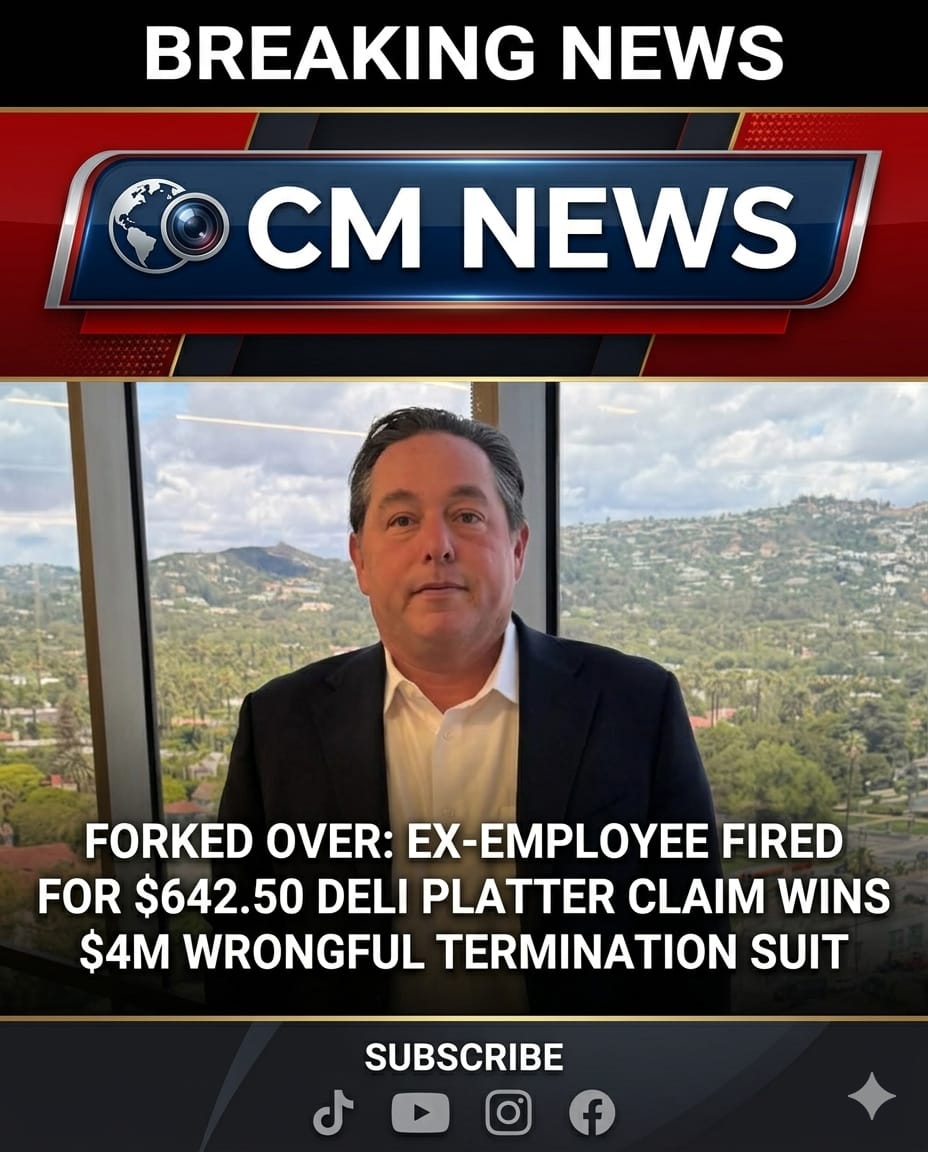
The legal battle drew attention after details emerged suggesting the employee had been terminated following allegations tied to a catering or food-related expense claim. A court or jury later determined that the dismissal was unlawful, leading to a substantial financial award in favor of the former worker.
Details of the Lawsuit
According to reports circulating online, the dispute centered around a deli platter purchase valued at $642.50. The employee was allegedly accused of misconduct connected to the order, which ultimately led to their dismissal from the company.
While the exact details surrounding the incident vary across reports, the case appears to have focused less on the cost of the platter itself and more on whether the employer followed lawful procedures before firing the worker.
Wrongful termination lawsuits often arise when employees claim they were dismissed unfairly, discriminated against, retaliated against, or terminated without proper investigation or due process. In this instance, the former employee successfully argued that the company’s decision violated employment protections or contractual obligations.
The reported $4 million award may include several categories of damages, including:
Lost wages and benefits
Emotional distress compensation
Punitive damages
Legal costs and attorney fees
Large employment-related verdicts are not uncommon in cases where juries believe a company acted improperly or failed to follow workplace laws.
Why the Case Has Gained Attention
The story has attracted significant attention online because of the contrast between the relatively small amount involved in the deli platter dispute and the massive financial consequences that followed.
Many social media users have reacted to the case as an example of how costly workplace disputes can become when employers fail to manage disciplinary processes carefully. Others have pointed to the case as a reminder that employee terminations should involve clear documentation, internal review procedures, and fair treatment.
The phrase “forked over” quickly became a trending talking point online, with users discussing how a seemingly minor expense issue escalated into a multimillion-dollar legal judgment.
Workplace Policies and Employer Responsibilities
Employment law experts frequently emphasize that companies must follow established procedures when investigating alleged misconduct. Even when employers believe an employee violated company rules, courts may still rule against a business if the termination process is deemed unfair or unlawful.
Key issues often examined in wrongful termination cases include:
Whether the employee received due process
If company policies were applied consistently
Whether discrimination or retaliation occurred
The existence of sufficient evidence
Compliance with labor laws and employment contracts
In many jurisdictions, employers are expected to conduct reasonable investigations before making termination decisions. Failure to do so can expose companies to substantial legal and financial risks.
Human resources professionals also note that workplace disputes involving expenses, reimbursements, or purchasing authority can become particularly sensitive when communication breaks down between management and employees.
Broader Impact on Businesses
Cases like this often serve as cautionary examples for businesses across multiple industries. Legal experts say employers increasingly face scrutiny over how they handle workplace discipline, especially in an era where employment practices are frequently discussed publicly on social media platforms.
A multimillion-dollar judgment can affect companies in several ways:
Financial Consequences
Beyond direct legal payouts, businesses may also face higher insurance costs, reputational damage, and increased legal compliance expenses following high-profile employment cases.
Public Image Concerns
In the digital age, workplace disputes can quickly gain viral attention. Companies involved in controversial termination cases may experience negative publicity that affects customer trust and employee morale.
Internal Policy Reviews
Following major lawsuits, organizations often review internal HR policies, training programs, and disciplinary procedures to reduce future legal exposure.
Employee Rights in Wrongful Termination Cases
Employment protections vary depending on local labor laws, contracts, and workplace agreements. However, employees generally have the right to challenge dismissals they believe were unlawful.
Wrongful termination claims may involve allegations such as:
Retaliation for reporting misconduct
Discrimination based on protected characteristics
Breach of employment agreements
Violation of whistleblower protections
Unfair disciplinary procedures
Legal experts typically encourage both employers and employees to document workplace communications carefully, especially in disputes involving financial transactions or accusations of misconduct.
Online Reactions Continue to Grow
The unusual nature of the story has fueled continued discussion online, with many users debating whether the outcome reflects excessive corporate punishment or necessary accountability for employers.
Some commentators argue that businesses must take employment law compliance more seriously, while others believe companies face growing legal risks even in relatively minor workplace disputes.
Regardless of differing opinions, the case has become another example of how workplace conflicts can escalate into major legal battles with significant financial consequences.
Conclusion
The reported $4 million wrongful termination award connected to a $642.50 deli platter dispute has drawn widespread public interest and renewed conversations about employee rights, workplace investigations, and corporate accountability.
While the financial figure has captured headlines, the case also highlights the broader importance of fair disciplinary procedures and legal compliance in modern workplaces. As businesses continue navigating complex employment laws, cases like this may encourage organizations to reassess how internal disputes are handled before they develop into costly legal challenges.