Politics
2028 Presidential Race Takes Shape Early as Rubio Surges in GOP Poll, Democrats Face Uphill Battle
A new national poll suggests the race for the White House in 2028 is already generating significant political momentum, with early Republican numbers showing a surprisingly competitive field — and Democrats registering warning signs more than two years before election day.
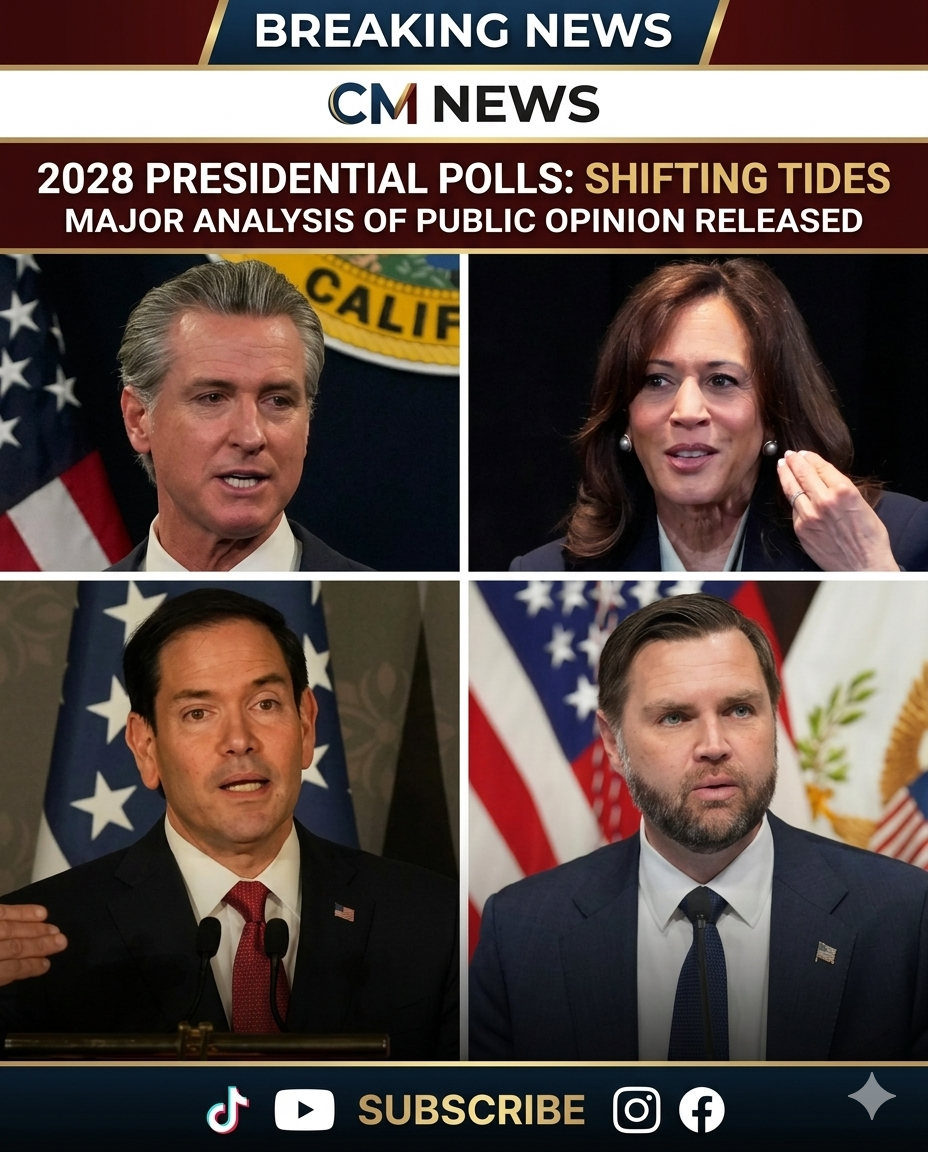
A fresh survey from Emerson College has offered one of the earliest snapshots of the 2028 United States presidential race, revealing a tightly contested Republican field and a Democratic Party facing early headwinds in voter sentiment. According to the poll, Secretary of State Marco Rubio has surged in support and is now virtually tied with Vice President JD Vance — the presumptive frontrunner for the GOP nomination — with both candidates sitting at 35%. The findings mark a notable shift from previous polling and signal that the Republican primary could be far more competitive than initially anticipated.
What the Poll Shows
The Emerson College poll, one of the most closely watched survey institutions in American politics, found that Republican voters are far from settled on a single standard-bearer for 2028. Secretary of State Marco Rubio's rise to 35% — matching Vance's standing — represents a significant gain from his earlier polling numbers and suggests growing enthusiasm for him as a potential presidential candidate within conservative circles.
Vice President JD Vance, who had previously been regarded as the early frontrunner given his proximity to the Trump White House, now finds himself in a dead heat with Rubio. For Vance, who has built his political brand closely around the MAGA movement and former President Donald Trump's legacy, the emergence of a credible rival this early in the cycle is a development his campaign will need to take seriously.
On the Democratic side, the poll paints a more concerning picture. The party, which is still navigating its identity in a post-Biden era, is registering early unfavorable trends in voter sentiment — a situation that political analysts say reflects both the challenges of being out of the White House and the ongoing debate within the party about its direction, messaging, and leadership.
Who Are the Key Players?
Marco Rubio is a former U.S. Senator from Florida who twice ran for the Republican presidential nomination — most notably in 2016, when he lost the primary to Donald Trump. Since then, Rubio has aligned himself more closely with the Trump wing of the party and currently serves as Secretary of State in the Trump administration. His foreign policy experience, national profile, and appeal to both establishment Republicans and Trump loyalists make him a formidable potential candidate.
JD Vance, the sitting Vice President of the United States, entered politics relatively recently but rose rapidly after the success of his memoir Hillbilly Elegy and his close endorsement by former President Trump. Vance has been widely seen as Trump's preferred political heir and carries significant support among the Republican base. However, the Emerson poll suggests that his path to the nomination is not guaranteed.
The Democratic Party has yet to produce a clear frontrunner for 2028. Following President Biden's decision not to seek re-election in 2024 and Vice President Kamala Harris's subsequent loss in the general election, the party is in a period of rebuilding and soul-searching. No single figure has emerged as the dominant voice or presumptive nominee, leaving the Democratic field wide open — and, according to this poll, trailing in early sentiment measures.
Why Early Polls Matter — and Their Limits
It is important to place this polling data in its proper context. Presidential elections in the United States are decided through the Electoral College, and public opinion can shift dramatically over a two-year period. History is full of examples of early frontrunners who did not secure their party's nomination, and of candidates who emerged from relative obscurity to become major contenders.
That said, early polls do carry real significance for several reasons. They shape media narratives, influence donor decisions, and signal to potential candidates whether a run is viable. A strong early showing can attract fundraising, talent, and momentum — while a weak performance can discourage a candidacy before it formally begins.
For the Republican Party, the Rubio-Vance tie is likely to prompt both camps to accelerate their behind-the-scenes organizing. For Democrats, the early deficit in the polls will likely intensify internal debates about what kind of candidate — and what kind of platform — can recapture voter confidence after the 2024 loss.
The Broader Political Landscape
The 2028 election will take place in a United States that is still absorbing the political consequences of the Trump era, the aftermath of the 2024 election cycle, and significant shifts in both domestic and foreign policy. Economic conditions, ongoing international conflicts, and evolving domestic priorities will all shape voter preferences considerably between now and election day.
For the Republican Party, the central question will be whether the next nominee attempts to extend Trump's legacy or carve out a distinct identity. Both Rubio and Vance represent different — though not entirely incompatible — answers to that question.
For Democrats, the challenge is more fundamental: rebuilding a coalition broad enough to win a national election while finding consensus on key policy issues including immigration, the economy, healthcare, and climate.
Conclusion
The Emerson College poll offers a compelling early glimpse into what could be an intensely competitive 2028 presidential race. With Marco Rubio and JD Vance deadlocked at 35% among Republican respondents, and Democrats showing early vulnerability in national sentiment, the groundwork for a consequential election cycle appears to be taking shape well ahead of schedule. As political organizing, fundraising, and media attention begin to build, these early numbers — while not predictive — will likely influence the strategies and decisions of candidates, parties, and donors in the months ahead.
Reported by CM NEWS | Published May 29, 2026