Sports
2026 World Cup Boycott Fears Grow as International Fans Cancel Tickets Over U.S. Safety Concerns
A mounting wave of concern is rippling through the global soccer community as thousands of international fans voluntarily withdraw from plans to attend the 2026 FIFA World Cup, set to be jointly hosted across the United States, Canada, and Mexico. What began as isolated expressions of discomfort has evolved into an organized and widely discussed movement, raising serious questions about tournament attendance, FIFA's institutional credibility, and the United States' readiness to welcome the world
FIFA Faces Legitimacy Crisis Amid ICE Enforcement Controversy and Trump "Peace Prize" Backlash
Among the most striking developments in this unfolding story is the public intervention of Sepp Blatter, the former FIFA president who served at the helm of global soccer's governing body for nearly two decades. Despite his own controversial legacy — including a ban from the sport following a corruption investigation — Blatter has issued a candid advisory urging international fans to reconsider travel to the United States for the tournament.
His warning carries symbolic weight. For a former leader of the very organization that awarded the United States hosting rights to speak openly about fan safety is virtually unprecedented in the modern era of major tournament hosting. Legal analysts and human rights observers have echoed similar concerns, citing a deteriorating environment for foreign nationals entering the country.
ICE Enforcement Tactics at the Center of Safety Fears
A core driver of the boycott movement is growing alarm over enforcement actions by U.S. Immigration and Customs Enforcement (ICE). Reports of aggressive detentions, including incidents involving individuals with no criminal background, have circulated widely in international media. For fans traveling from abroad — even those from countries whose citizens do not require visas — the prospect of surveillance, questioning, or random detention at ports of entry has become a genuine deterrent.
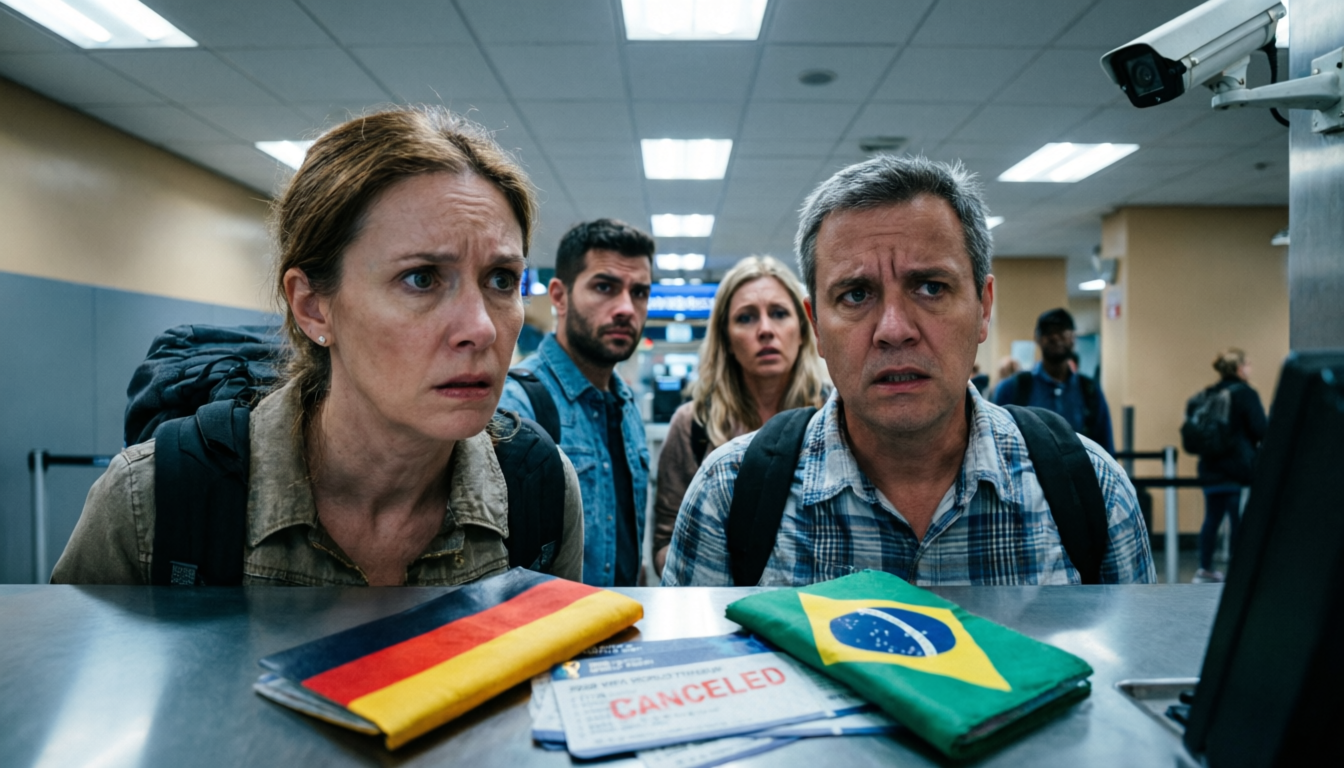
This concern is not limited to fans from politically sensitive nations. Supporters from Germany, Brazil, Argentina, the Netherlands, and other countries facing no formal travel restrictions have reported canceling purchased tickets, citing a personal risk calculation that goes beyond government policy. In online soccer forums and fan association meetings across Europe and South America, a recurring theme has emerged: the tournament simply does not feel safe to attend in person.
Fan organizations in Germany, one of the sport's most passionate and travel-ready supporter bases, have reported a measurable drop in group travel bookings. Similar patterns have been documented among Brazilian supporter clubs, whose members traditionally travel in large numbers to international tournaments.
The Trump "Peace Prize" Decision: A Flashpoint for FIFA's Critics
FIFA's credibility suffered a significant additional blow following its decision to award a so-called "Peace Prize" to former and current U.S. President Donald Trump. The announcement triggered immediate and widespread backlash from human rights groups, players' associations, and fans across multiple continents.
Critics argue the decision directly contradicts FIFA's own stated commitments to human rights, inclusion, and the protection of vulnerable communities — values the organization has repeatedly cited when defending tournament hosting decisions in other controversial contexts. The contradiction was not lost on the global soccer community. If FIFA has previously pressured host nations on issues of LGBTQ+ rights, labor standards, and press freedom, awarding a ceremonial honor to a figure whose administration has been associated with mass deportations and the violent dispersal of protesters is viewed by many as a fundamental inconsistency.
Legal scholars specializing in international sports governance have noted that this decision may expose FIFA to formal challenges from member associations and sponsor partners who have their own reputational standards to protect.
Broader Questions About Host Nation Exclusions and Human Rights Policy
The boycott conversation has also reignited a longer-standing debate about which nations were excluded from hosting consideration and why. Critics point to what they describe as a selective application of FIFA's human rights framework — one that scrutinizes certain nations while granting others a pass based on geopolitical convenience or commercial interest.
This perceived double standard has resonated particularly in Africa, Asia, and Latin America, where fans and football administrators have long questioned whether FIFA's standards are applied equitably across different regions and political systems.
For many observers, the 2026 tournament has become a lens through which FIFA's institutional values are being tested in real time. The outcome will likely shape discussions around future hosting bids for years to come.
What This Means for Tournament Attendance and Revenues
From a practical standpoint, the implications for the 2026 World Cup are significant. Major international tournaments depend not only on ticket sales but on the economic and cultural energy generated by traveling fan bases. The color, noise, and spending power of international supporters contribute directly to host city revenues, broadcast atmosphere, and the global television product.
A tournament where international attendance is visibly suppressed — even if domestic American attendance remains strong — risks projecting an image of isolation rather than celebration. That perception gap, captured in wide-angle stadium shots and social media footage, can define how a tournament is remembered long after the final whistle.
FIFA's commercial partners, including global sponsors with their own brand safety guidelines, will be watching attendance figures and public sentiment closely as the tournament approaches.
The Decision Belongs to Individual Fans
Perhaps the most significant aspect of this story is its grassroots nature. Unlike government-led boycotts of past Olympic Games or World Cups — where state decisions removed entire national teams or delegations — this movement is driven entirely by individual fans making personal choices.
No government has instructed its citizens not to attend. No national soccer federation has withdrawn its team. The fans themselves, exercising their own judgment about personal safety and values alignment, are driving this withdrawal.
That distinction makes the situation harder for FIFA to manage or dismiss. There is no single political actor to negotiate with, no government statement to respond to, and no policy reversal that would immediately resolve the underlying concerns.
Conclusion
The 2026 FIFA World Cup remains more than a year away, and the situation continues to evolve. What is already clear is that FIFA faces a challenge unlike any it has encountered in the modern tournament era — not a crisis of logistics or infrastructure, but a crisis of trust. Whether the organization chooses to address the concerns raised by former leaders, legal experts, and tens of thousands of ordinary fans may ultimately determine whether the tournament is remembered as a global celebration of football or a cautionary chapter in the sport's governance history.
CM NEWS will continue to monitor developments related to the 2026 World Cup, FIFA policy decisions, and international fan travel advisories as the tournament date approaches.
This article was written for CM NEWS in accordance with editorial standards for factual, balanced, and original news reporting.